Fly-rod labels can look like a code: 9 feet (2.74 m), 5-weight, four pieces and medium-fast action. In practice, you need to make only four decisions before buying: the fish you will pursue, the water you will visit, the flies you need to cast and the amount you can spend on the complete outfit.
For many beginners fishing for trout in rivers and lakes, a 9-foot (2.74 m) 5-weight, four-piece rod with a medium or medium-fast action is an excellent starting point. It is not universal, however. A brushy creek may favour a shorter, lighter rod; a windy lake or larger streamers may call for a 6-weight; salmon and saltwater fishing often require specialized tackle.
This guide explains what the specifications mean so that price and brand do not become substitutes for a sound decision.
Begin with three questions, not a brand
Write down your answers before comparing rods:
- Which fish will you pursue most often? Small trout, average trout, bass, salmon and pike do not use the same flies or require the same power.
- Where will you fish? A tight creek, an open river and a windy lake create different casting and line-control problems.
- Which flies will you cast? A small dry fly needs delicacy. A weighted nymph rig, indicator or bulky streamer requires more energy.
Fish size matters, but the rod must first be able to deliver the fly and rig. A large, wind-resistant fly may justify a heavier line even when the fish themselves are not unusually large.
Decode “9-foot (2.74 m) 5-weight”
The 9-foot measurement is the rod length, approximately 2.74 m. The number 5 does not describe the rod’s physical weight. It identifies the fly-line weight the rod is designed to cast.
A label such as 9' 5-wt 4-piece therefore means:
- a 9-foot (2.74 m) rod;
- designed for a 5-weight fly line;
- built in four sections.
For a first outfit, normally match a 5-weight rod with a 5-weight line. Some modern lines are intentionally a little heavier, but do not change the basic match until you have a specific reason and useful advice from a knowledgeable shop.
Which fly-rod length should you choose?
Length affects manoeuvrability, line control and your ability to hold line off the water. Longer does not automatically mean better.
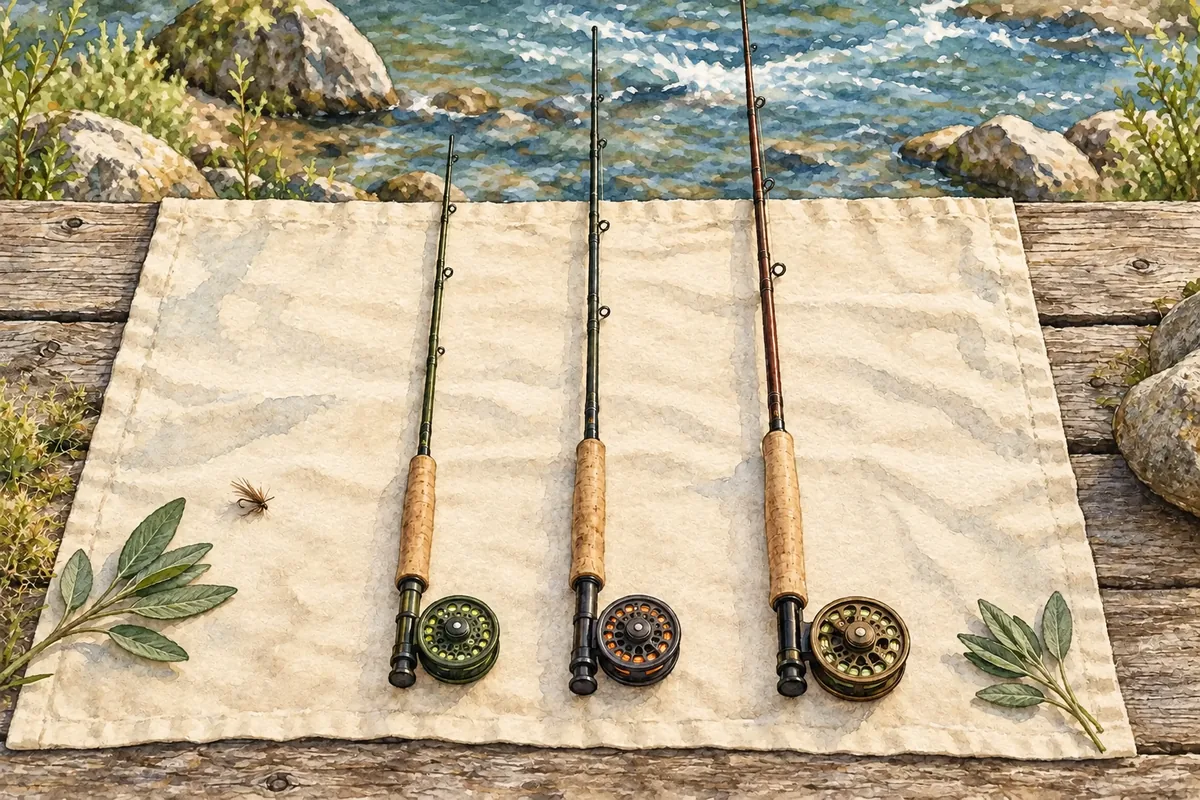
7 to 8 feet (2.13 to 2.44 m): tight creeks
A short rod is easier to move beneath branches and through confined spaces. It suits short casts, small flies and modest fish. It offers less reach for controlling long drifts on broad water.
8 feet 6 inches (2.59 m): manoeuvrable but adaptable
This length is useful when your river remains fairly narrow but you want more reach than a dedicated creek rod provides. It travels easily and still feels comfortable while learning.
9 feet (2.74 m): the versatile compromise
A 9-foot (2.74 m) rod helps lift line, mend a drift and practise several presentation styles. It is the logical default when you have not chosen a specialty or expect to alternate between rivers and lakes.
9 feet 6 inches to 10 feet (2.90 to 3.05 m): reach and specialized control
Longer rods can improve line control for particular nymphing and stillwater methods. They are more awkward under trees, and their swing weight may become tiring. Choose one as a first rod only when your primary technique already requires the extra length.
Which line weight should you choose?
The line number should match the rod and the work required. A lighter line favours delicate presentations. A heavier line carries bulkier rigs more easily and handles wind better.
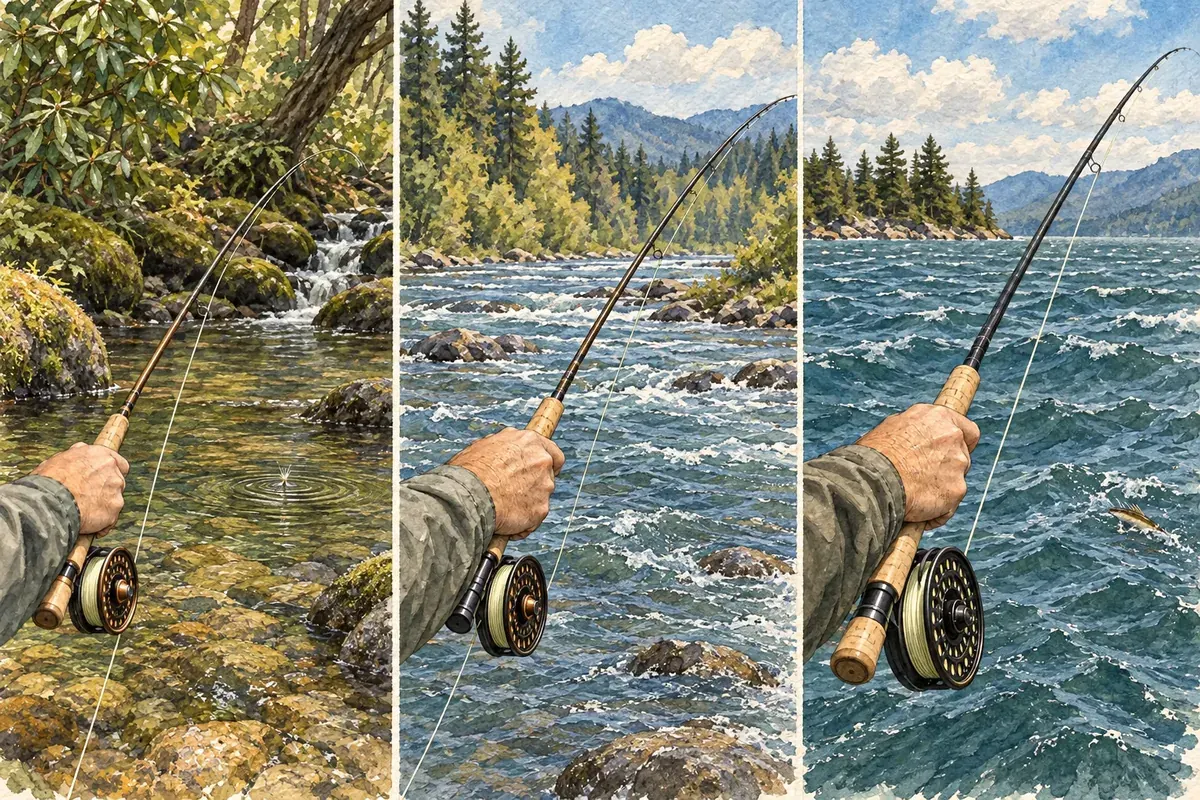
| Line weight | Good starting use | Main limitation |
|---|---|---|
| 3 or 4 | Tight creeks, small dries and modest trout | Less comfortable in wind or with heavy rigs |
| 5 | Versatile trout fishing with dries, nymphs and small streamers | Not ideal for very large streamers or exposed windy lakes |
| 6 | Lakes, frequent wind, indicators and larger streamers | Less delicate on a tiny creek |
| 7 or 8 | Large flies, larger fish and specialized situations | Heavier and more tiring; rarely the best first choice for ordinary trout fishing |
For average trout in medium rivers and some lakes, a 5-weight remains the most flexible choice. If almost every outing will take place on exposed stillwater or involve streamers, a 6-weight may be more realistic. For salmon, pike, unusually large bass or saltwater species, get advice specific to the fish, location and flies.
Medium, medium-fast or fast action?
The termaction describes mainly how the rod bends and recovers.
- A medium-action rod bends farther down the blank and helps a learner feel it load. It encourages a calm rhythm but may lack authority with a heavy rig.
- A medium-fast rod balances feel, accuracy and reserve power. It is a strong choice for a versatile first outfit.
- A fast-action rod bends more toward the tip. It can generate higher line speed in wind but often demands more precise timing. A higher price does not automatically make it easier to learn.
If possible, cast the rod with 20 to 30 feet (about 6 to 9 m) of line beyond the tip. A rod that lets you feel the load and form repeatable loops will help more than a prestigious model whose rhythm does not suit you.
Four pieces or two?
For most beginners, a four-piece rod is the practical choice. It fits a short tube, travels easily and stores well in a vehicle. Modern four-piece rods offer more than enough performance for learning.
Seat each ferrule firmly without forcing it. Check alignment during the day, especially after repeated casting. A loose section can rotate or damage the joint.
What should a first fly-fishing outfit cost?
Prices vary by country, promotions and warranty coverage. In September 2026, ready-to-fish outfits observed in several markets ranged from roughly €95 for a very economical package to €500 for a more refined one. In Canada, complete outfits from established brands commonly sit around CAD $230 to $400.
Treat the following as shopping benchmarks, not promised prices:
| Approximate total budget | What to look for |
|---|---|
| CAD $150–$250 | Functional complete outfit; inspect the fly line, case and warranty carefully |
| CAD $250–$450 | Strong value range: a more consistent rod, serviceable line, matching reel and protective case |
| CAD $450–$750 | Better components, finish or warranty; worthwhile when you already know your preferences |
| More than CAD $750 | Specialization, lighter materials or premium finish; rarely necessary for learning |
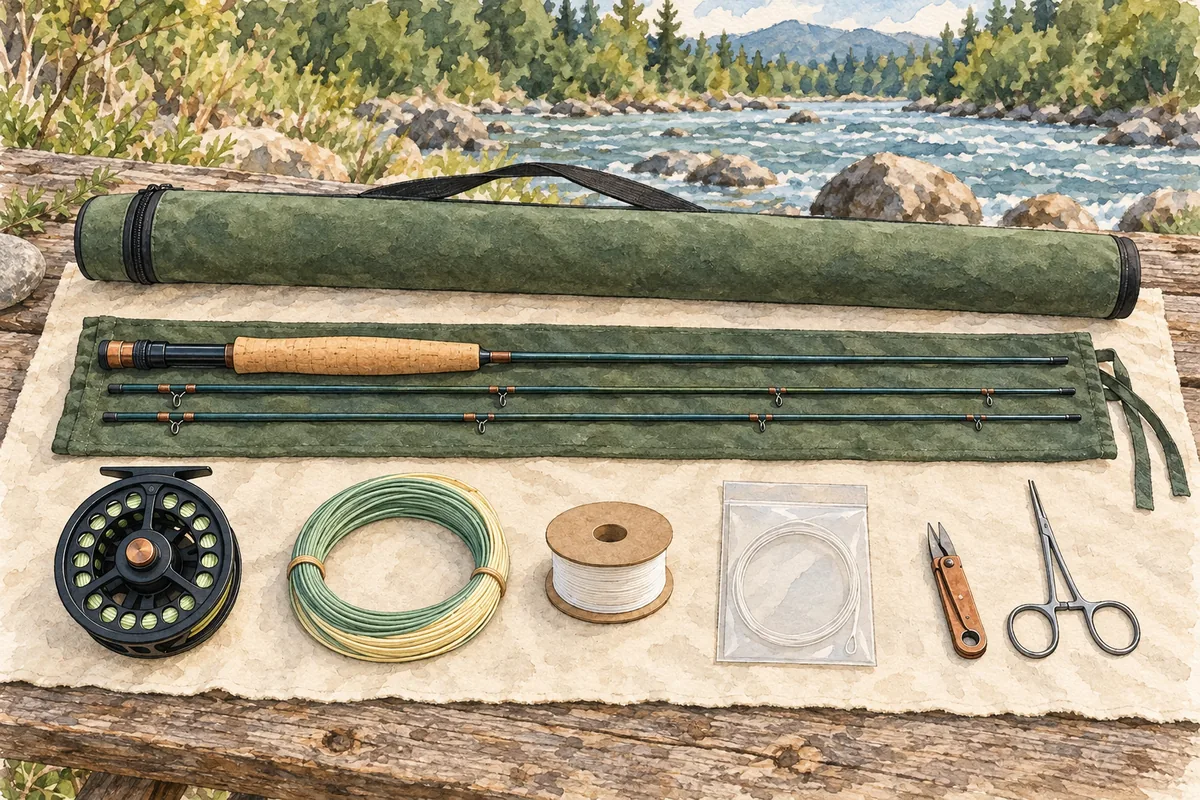
For ordinary trout fishing, the reel mainly stores line and balances the rod. It does not need to consume most of the budget. Give priority to a suitable rod, a sound weight-forward floating line—usually marked WF —and clear after-sales support.
Complete outfit or separate components?
A complete outfit reduces compatibility mistakes. Confirm exactly what is included:
- matched rod and reel;
- backing already installed;
- floating fly line in the correct weight;
- tapered leader;
- a case that protects the rod, ideally with the reel attached;
- reel retrieve set for the hand you use to recover line;
- warranty and access to replacement parts or a spare tip section.
Buying separately becomes useful when you already want a particular fly line, a reel shared with another rod or a very specific action. During a first season, the simplicity of a properly matched outfit is often more valuable than a long list of randomly selected components.
Three quick starting profiles
Brushy small creek
Choose approximately 7 feet 6 inches to 8 feet 6 inches (2.29 to 2.59 m), a 3- or 4-weight line and medium or medium-fast action. You gain manoeuvrability but give up some versatility on larger water.
Versatile trout fishing in rivers and lakes
Choose a 9-foot (2.74 m) 5-weight, four-piece, medium-fast rod with a WF5 floating line. This remains the most defensible default when conditions will vary.
Lakes, wind or frequent streamers
Choose approximately a 9-foot (2.74 m) 6-weight with medium-fast action. It carries larger flies more comfortably but feels heavier and less delicate on a small stream.
Seven expensive mistakes to avoid
- Buying a rod before deciding where it will be used.
- Confusing line weight with the rod’s physical weight.
- Mismatching rod and line numbers without a clear reason.
- Spending the entire budget on the rod and accepting a very poor fly line.
- Assuming fast action or a high price automatically makes learning easier.
- Ignoring the case, warranty and availability of replacement tip sections.
- Buying for one dream trip instead of the water you can fish every week.
Take this checklist to the shop
Before paying, confirm:
- target species and usual water type;
- rod length, line weight, action and number of sections;
- the exact fly line included in the outfit;
- backing, tapered leader and case;
- warranty, repair fees and available replacement parts;
- whether you can make a few casts with the complete outfit;
- the final price once small essentials for the first outing are included.
The right first rod is the one you will use often
Your first rod does not need to cover every species and technique. It needs to suit the water you can actually visit and let you feel the line load without fighting the equipment.
If your plan remains general—trout, medium rivers, some lakes and reasonably sized flies—remember 9 feet (2.74 m), 5-weight, four pieces and medium-fast action. If your situation differs, change the line weight and length to match the water and flies before deciding on price or brand.
Next, use the beginner’s first-outing guideto prepare the rest of your setup. A good first rod should make you want to practise, not make you feel that you must master everything before reaching the water.
Keep exploring this world

Streamer Fishing for Trout: How to Work Your Fly
Learn three simple streamer retrieves, control depth and line contact, and decide what to change when a trout follows without biting.
Read the article
Nymph Fishing: How to Find the Right Depth
Understand indicators, weight and sinking time, then use simple comparisons to find a suitable nymph depth in a river.
Read the article
Fly Fishing Roll Cast: How to Fish with Trees Behind You
Learn to cast with limited space behind you: anchor, D-loop, five practical steps, common mistakes and a ten-minute practice session.
Read the article