A hen that stops laying : this situation quickly worries anyone who keeps a few hens at home. You get used to gathering fresh eggs almost every day, then the nest box suddenly stays empty. Before fearing the worst, know that a drop in laying can be normal depending on the season, age, moult, stress, diet or a lack of light.
When a hen stops laying, the goal is to understand the cause without panicking. By observing her behaviour, her environment and her diet, it becomes easier to take the right steps to help her naturally. This approach builds practical skills, helps you better understand the animals' rhythm, and keeps a small henhouse simple, healthy and pleasant day to day.
Why is my hen laying less or not at all?
A hen doesn't always stop laying for a serious reason. Egg-laying depends on several things that must all come together: enough light, a suitable diet, good overall health, a calm environment and an age that favours egg production.
The first thing to check is the season. Hens often lay more in spring and summer, when the days are long. In autumn and winter, the light decreases, which can naturally slow down their laying cycle.
Age also plays an important role. A young hen sometimes starts laying irregularly before finding her rhythm. An older hen can keep laying, but less often than in her best years.
The moult is another common cause. During this period, the hen loses her old feathers and grows new ones. This process takes a lot of energy. It's therefore normal for laying to drop or stop temporarily.
Stress can also disrupt egg production: new hens arriving, the presence of predators, unusual noise, a change of henhouse, intense heat, a lack of space or conflicts within the group. A stressed hen may keep her energy to survive rather than to produce eggs.
Hen stopped laying: when should you worry?
Il faut s’inquiéter surtout lorsque l’arrêt de ponte est accompagné d’autres signes inhabituels. Si votre poule mange bien, boit normalement, gratte le sol, se déplace avec énergie et garde un comportement habituel, la baisse de ponte peut simplement être liée à la saison, à la mue ou à un changement dans son environnement.
On the other hand, look more closely if she stays isolated, seems tired, keeps her feathers puffed up, loses weight, breathes with difficulty, has a very pale comb, produces abnormal droppings or refuses to eat. In that case, the problem may go beyond a simple pause in laying.
When a hen hasn't laid for several weeks for no obvious reason, it's worth reviewing her whole environment. Is the nest box clean and quiet? Is the water fresh? Are the hens getting a layer feed? Do they have access to calcium? Are there parasites in the henhouse? A simple observation routine often makes it easy to spot quickly what's wrong.
You should also check that the hen isn't laying elsewhere. Some hens suddenly change spot and hide their eggs in the straw, under a shelter, in a dark corner or even outside. Before concluding she has stopped completely, inspect the calm, sheltered places around the henhouse.
What to do to restart egg-laying?
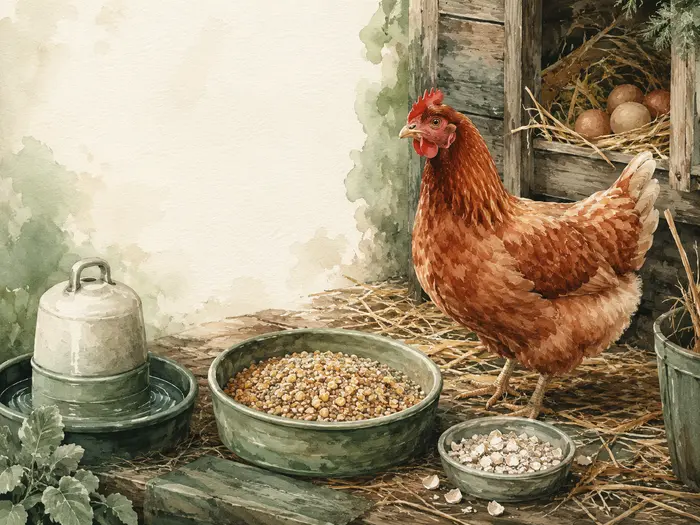
To help a hen start laying again, begin with the basics. Offer a complete feed for laying hens, with enough protein, minerals and calcium. A hen that lacks nutrients may reduce her output, lay eggs with fragile shells or stop laying for a while.
Water matters just as much. A hen must have access to clean water at all times. In summer, the heat can reduce appetite and increase water needs. In winter, the water can freeze, which limits hydration and harms the laying rhythm.
Also add a free-choice source of calcium, such as crushed oyster shells. The hens can eat it according to their needs. You shouldn't replace the base diet with table scraps, because too many treats can unbalance their nutrition.
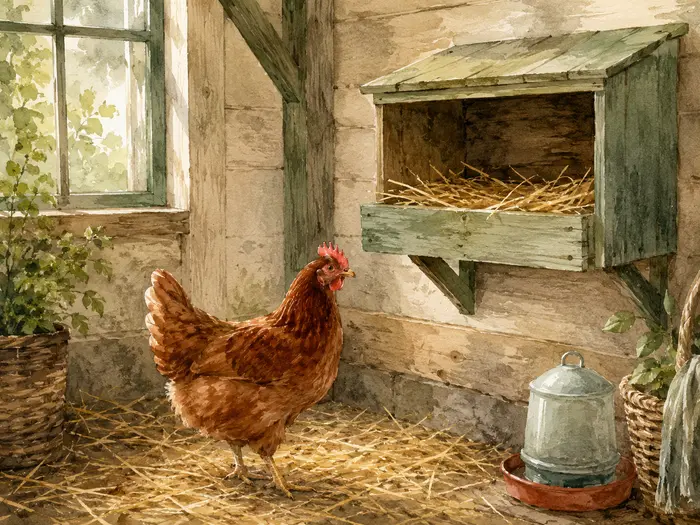
Next, improve the comfort of the nest box. It should be dry, clean, slightly dark and quiet enough. A hen likes to lay in a place where she feels safe. A nest box that is too exposed, dirty or noisy can discourage laying.
Finally, reduce sources of stress. Protect the henhouse against predators, avoid sudden changes in the group, offer enough space and keep a stable routine. A hen that feels safe often gets back to her natural rhythm more easily.
Is it normal for a hen to lay less in winter?
Yes, it's normal for a hen to lay less in winter. Laying is strongly influenced by daylight. When the days get shorter, the hen's body naturally slows its output. This isn't necessarily a health problem.
This seasonal break can even be beneficial. It lets the hen recover, especially after a period of heavy laying or during the moult. In a more natural approach to small-scale keeping, it's helpful to respect this rhythm rather than trying to force production at all costs.
Some people use artificial lighting to extend the days in winter, but this choice should be well thought out. Light can stimulate laying, but hens also need rest. For a small family henhouse, it's often simpler and more respectful to accept a temporary drop while maintaining good living conditions.
If a hen stops laying in winter but stays active, eats well and seems healthy, there's usually no need to panic. Keep giving her good food, unfrozen water, a dry shelter and protection from draughts.
Common mistakes that can block laying
A common mistake is giving too many kitchen scraps. Even though hens love to peck at various foods, they need a stable nutritional base. Too much bread, pasta, corn or treats can reduce their intake of complete feed.
Another mistake is neglecting the cleanliness of the henhouse. A damp, dirty or parasite-infested environment can tire the hens and harm their wellbeing. Red mites, for example, can weaken the birds at night and cause a drop in laying.
A lack of safety is also an important factor. Even if a predator doesn't get into the henhouse, its presence around the enclosure can be enough to stress the group. Hens that feel threatened may lay less or change their habits.
You should also avoid comparing all the hens with each other. Some breeds lay a lot, others less. Some hens are regular, others take more breaks. Getting to know each hen's rhythm helps you better understand what's normal and what isn't.
How to track laying without making life complicated?
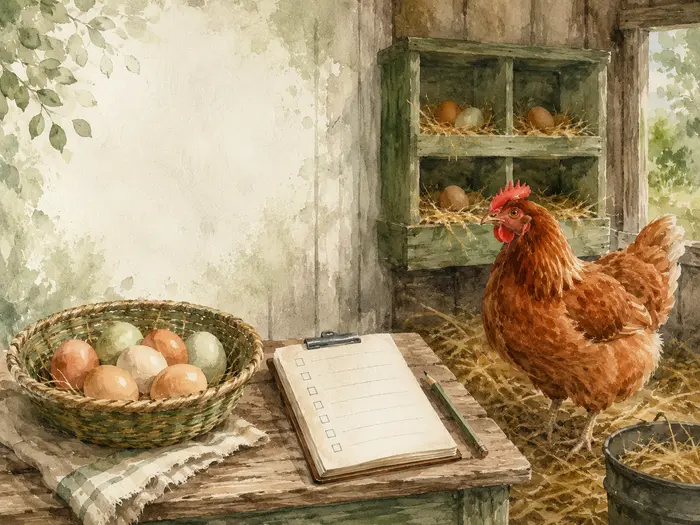
The simplest thing is to note down each day the number of eggs collected. A small notebook, a printed chart or a sheet near the henhouse is enough. You can also note important changes: moult, arrival of a new hen, cold snap, intense heat, change of feed or the presence of predators.
This tracking lets you see trends instead of worrying after two or three days without eggs. It also helps you connect events with production. For example, if laying drops at the same time every year, it may simply match autumn or winter.
This approach makes keeping hens simpler and more reassuring. Instead of guessing, you observe, you note and you act only when needed. It's an excellent way to learn gradually, without jargon and without pressure.
Conclusion
A hen that stops laying isn't automatically ill. The drop in laying can be linked to light, winter, the moult, age, stress, diet or a change in the henhouse. What matters is looking at the whole situation rather than relying only on the number of eggs.
By checking the water, the food, the calcium, the safety, the comfort of the nest box and the general condition of your hens, you can often understand the cause of the problem and improve laying conditions naturally. This simple approach lets you care for your small flock with more independence, calm and confidence.
And you, have you noticed a specific time when your hens lay less: winter, during the moult or after a change in the henhouse?