Finding a broken egg or an empty shell in the nest box is frustrating. The first question is: why do my chickens eat their eggs, and above all, how can I stop this behavior before it spreads through the flock?
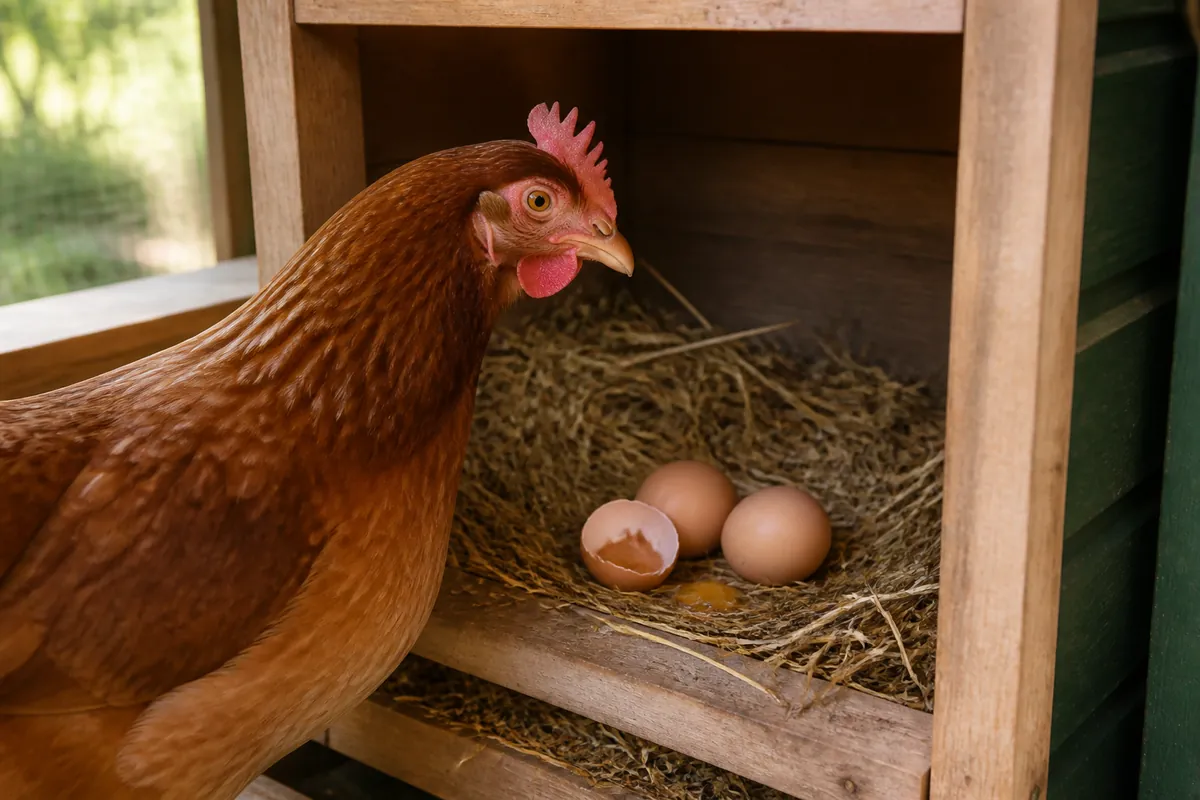
Most hens do not suddenly decide to break an egg and eat it. The problem usually begins with a cracked egg, a weak shell or an overcrowded nest box. A curious hen tastes the contents, discovers a rich food and may try again. Other hens can then copy her. This is why it is important to act quickly without punishing the birds.
How can you tell whether a hen is really eating the eggs?
A missing egg does not always prove that a hen ate it. A rat, snake or other predator may also carry off or break eggs. A very thin shell can collapse under a hen’s weight and then be pecked out of curiosity.
- You find open, crushed or almost completely empty shells.
- Dried yolk is visible on a hen’s beak or head feathers.
- A hen repeatedly visits the nest boxes without trying to lay.
- You see her pecking an intact egg or rushing toward a freshly laid egg.
- Eggs disappear mainly during the day, shortly after they are laid.
A camera placed temporarily outside the nest boxes can help you identify what is happening without disturbing the hens. Also check for rodent signs, openings in the coop and the strength of the eggshells.
Get 15 free checklists for your chicken coop
To help you remember every essential task, get Roger Grenier’s checklists covering daily care, maintenance, feeding and seasonal checks in one simple PDF guide.
Why do chickens eat their eggs?
1. An egg broke by accident
This is one of the most common triggers. Too little bedding, several hens using the same nest or eggs left too long all increase the risk of breakage. Once the contents are exposed, chickens naturally peck at them.
2. The shells are too fragile
An unbalanced diet, too little calcium, age, heat, stress or certain health problems can produce thin shells. They crack more easily and give hens access to the contents.
If several eggs are soft or fragile, also read our guide: Soft egg: why is your hen laying eggs without a solid shell?
3. There are too few nest boxes or they are poorly arranged
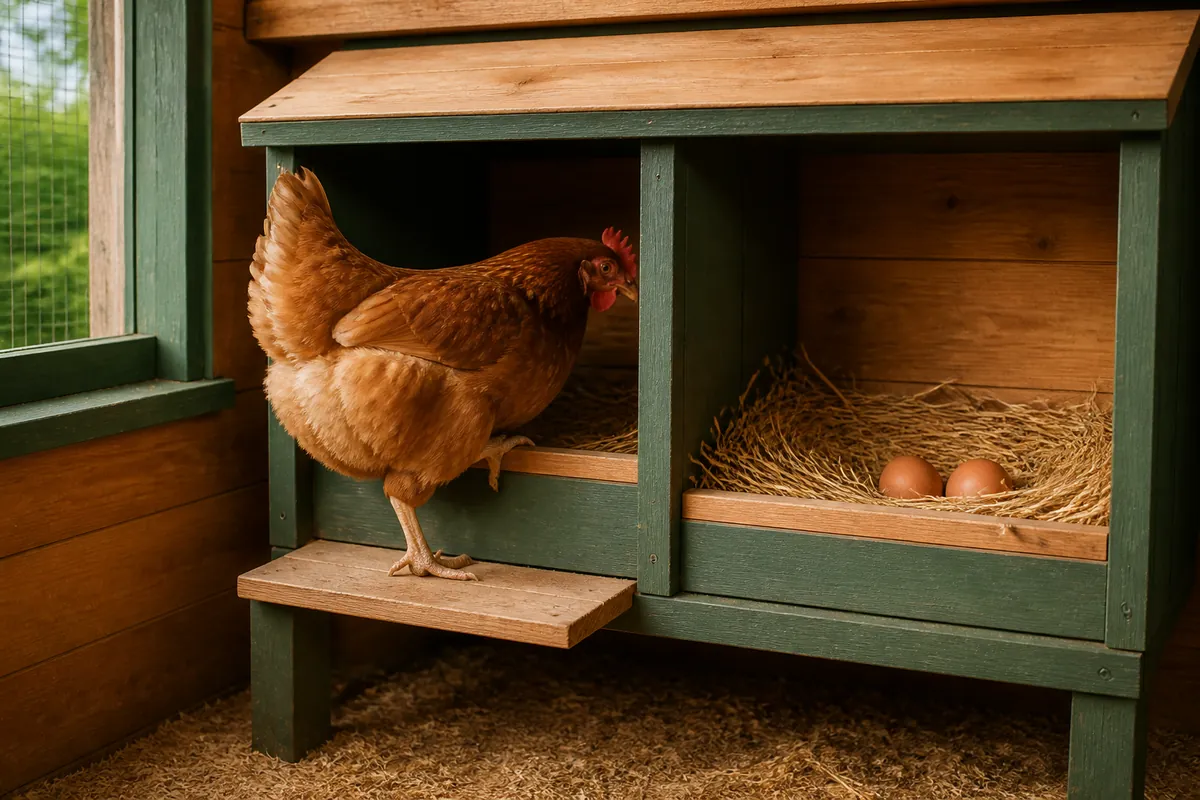
Too much traffic in the nests leads to collisions and broken eggs. A useful guideline is about one nest box for every four to five hens. Nests should be quiet, fairly dark, clean and lined with a soft layer of dry bedding.
4. Eggs remain in the nest too long
The longer an egg stays in the nest, the more likely it is to be stepped on, cracked or discovered by a curious hen. Most hens lay in the morning. Collecting eggs early and then again later greatly reduces opportunities for breakage.
5. The diet or access to water is inadequate
Scratch grains, corn and scraps do not replace a complete layer feed. A diluted ration may lack protein, vitamins or minerals and lead to fragile shells. Hens also need fresh water at all times and calcium, such as crushed oyster shell, in a separate container.
To review the entire diet, read: What Can Chickens Eat? Safe and Unsafe Foods.
6. Stress, bright light or boredom make pecking worse
Too little space, sudden changes, bright light aimed at the nest boxes or a lack of activity can increase nervousness and pecking. These factors are not always the main cause, but they can keep the problem going.
What to do now: your 48-hour action plan
| Action | Why it helps |
|---|---|
| Collect eggs at least two or three times a day | Reduces the time in which eggs can be broken or pecked. |
| Remove every cracked egg and all soiled bedding | Quickly removes the taste and smell that attract hens. |
| Add about 2 inches (5 cm) of clean, dry bedding to the nests | Cushions the eggs and limits cracks. |
| Observe the nest boxes discreetly | Helps distinguish an egg-eating hen from a predator or accidental breakage. |
| Check the complete feed, water and calcium | Corrects nutritional causes and supports stronger shells. |
| Make the laying area slightly darker | Makes eggs less visible and creates a calmer place. |
Clean up the contents of a broken egg immediately. Replace damp bedding and wash your hands after handling raw eggs or soiled equipment.
How to stop a hen from eating eggs for good
Collect eggs early and often
For a few weeks, collect once in the morning, again around midday and once more in the late afternoon. If several hens always choose the same nest, collect more often or make the other nest boxes more inviting.
Improve the nest boxes
- Provide about one nest for every four to five hens.
- Keep the bedding clean, dry and thick enough to cushion the eggs.
- Place nest boxes in a quiet, dimly lit area.
- Prevent hens from sleeping in the nests so they stay clean.
- Block off dark corners where hens lay directly on the floor.
If the problem continues, a sloped roll-away nest that gently moves the egg out of reach can be an effective mechanical solution. It must be stable, comfortable and designed not to crack the eggs.
Strengthen shells without unbalancing the diet
Feed a complete layer ration and avoid diluting it with too much corn, grain or scraps. Offer crushed oyster shell separately so each laying hen can take what she needs. Do not add large, random amounts of calcium directly to the feed.
If you feed eggshells back to your hens, dry them and grind them very finely so they no longer resemble shells. Oyster shell prepared for poultry is often simpler to use.
Reduce stress and keep hens occupied
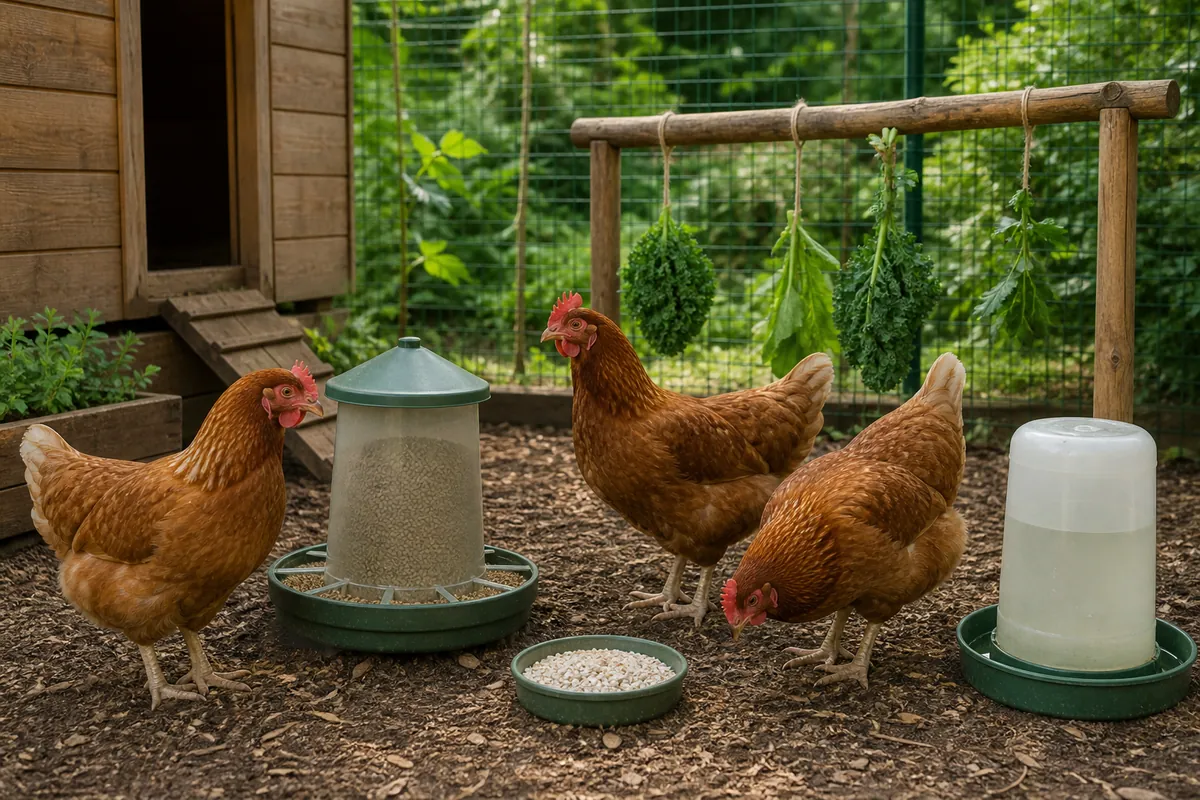
Provide enough feeder and drinker space, avoid bright lights near the nests and keep a regular routine. A secure outdoor area, scratchable litter, perches and a few hanging vegetables can encourage natural behaviors without replacing the main ration.
Keep predators away
Inspect small openings, tracks and droppings around the coop. Rats, snakes, skunks and other animals may eat eggs or leave residue that later attracts hens. Store feed in a closed container and repair access points.
Identify the hen without punishing her
If you clearly see a hen breaking eggs despite all the corrections, separate her briefly in a comfortable space with water, feed, shelter and visual contact with the flock. This separation is meant to confirm the behavior and protect the eggs, not to withhold care. Rearrange the nest boxes before reintroducing her.
A well-established habit can be difficult to eliminate. If it continues, ask an avian veterinarian or a local small-flock specialist to assess health, diet and suitable options. Avoid painful methods, irritants and punishment.
Common mistakes to avoid
- Waiting several days: the more often the behavior is repeated, the more likely other hens are to copy it.
- Only adding more calcium: you must also check the complete ration, water, nests and stress.
- Leaving recognizable shells: grind them into very fine particles before offering them.
- Using bright light in the nest boxes: the laying area should remain calm and fairly dark.
- Blaming a hen without proof: first check for predators, fragile shells and accidental breakage.
Frequently asked questions
Does a hen eat her eggs because she lacks calcium?
Not necessarily. A calcium shortage or an unbalanced ration can weaken shells and make breakage more likely, but the behavior often begins after a hen accidentally discovers a broken egg. Correct the whole environment rather than relying on a single supplement.
Can fake eggs help?
Solid dummy eggs can make pecking less rewarding and encourage hens to lay in the right place. However, they do not replace frequent collection, good bedding and a balanced diet.
Can you still eat a slightly cracked egg?
An egg cracked in the coop may be contaminated. As a precaution, discard eggs with broken shells, eggs soiled with raw contents or eggs whose time of cracking is unknown. Then clean the nest.
When should you contact a veterinarian?
Ask for advice if many shells suddenly become thin, egg production drops sharply, or a hen shows weakness, loss of appetite, an abnormal gait, persistent diarrhea or other signs of illness. Also read our article about a hen that has stopped laying.
Conclusion
To stop chickens from eating their eggs, first reduce the opportunities: collect often, protect eggs with clean, well-padded nests, provide a complete ration with calcium offered separately, and reduce stress. Also look for predators and causes of fragile shells. Acting quickly and calmly is often enough to prevent this bad habit from becoming established.