Chicken molting is a natural process in which old feathers fall out and are replaced by new plumage. You may suddenly find feathers throughout the coop, notice that a hen looks untidy and see egg production drop. Although the change can be surprising, it does not automatically mean that your hens are sick.
Growing a new coat of feathers requires a great deal of energy. By recognizing the normal signs, watching the regrowth and maintaining a balanced diet, you can help your hens without trying to hurry their natural rhythm.
Why do chickens molt?
Feathers protect a hen from cold, moisture and minor injuries. Over time, they wear down, break and become less effective. Molting replaces that worn plumage with a fresh coat before the cold season.
Adult hens often go through their main annual molt in late summer or fall as the days grow shorter. Some hens begin in August, while others do not start losing feathers until September, October or later.
Hens do not all molt at the same time or at the same speed. Age, breed, feather condition, daylight and laying pattern can all affect the schedule. One hen may lose many feathers quickly, while another renews her plumage much more gradually.
What are the signs of a normal molt?
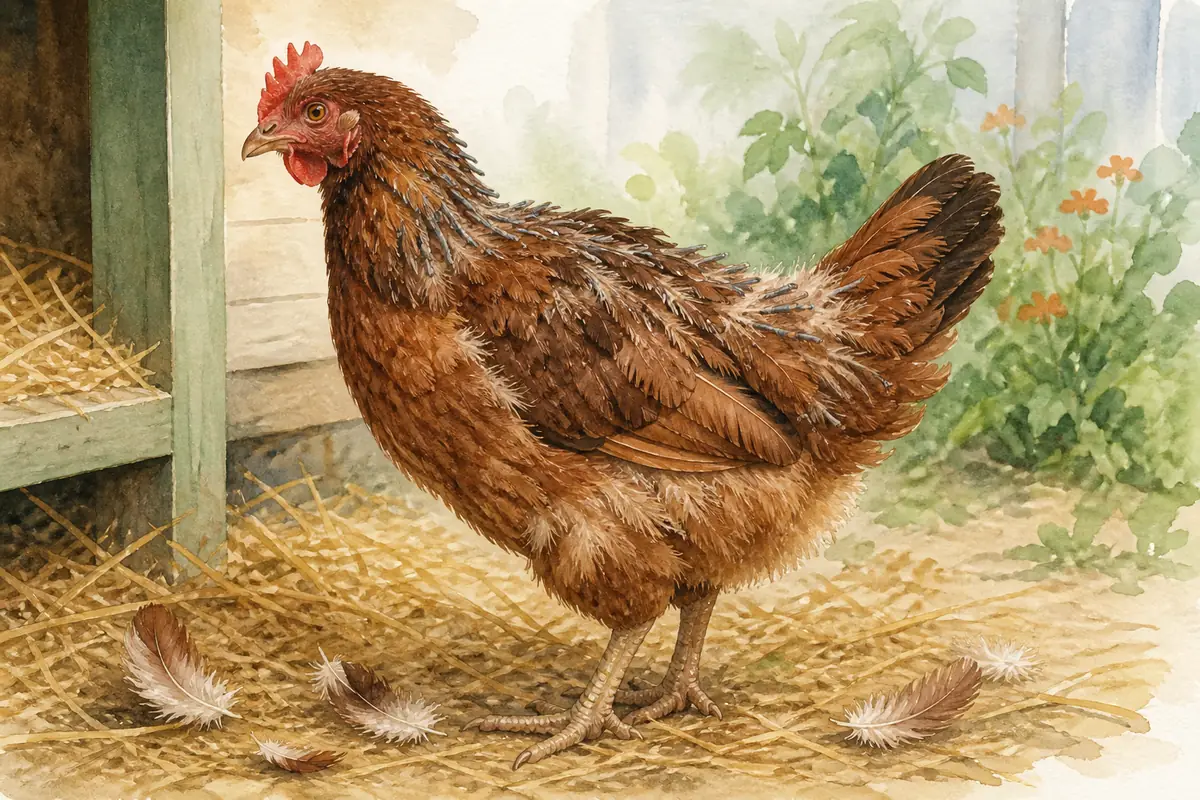
The first clue is often an unusual number of feathers on the floor, in nest boxes or beneath the roosts. The hen’s coat then becomes uneven. Feather loss often begins around the head and neck before moving over the body, wings and tail.
You may also notice short, firm new feathers known as pin feathers. Each one is initially covered by a protective sheath and can be sensitive while it grows.
A molting hen may show several of these signs:
- untidy or thinner-looking plumage;
- many loose feathers around the coop;
- short new feathers around the neck or back;
- a temporary decrease or pause in egg production;
- slightly quieter behavior;
- reluctance to be picked up or touched.
Despite her rough appearance, a hen going through a normal molt will generally continue to eat, drink, walk around and stay with the group.
How long does chicken molting last?
A molt often lasts six to twelve weeks, although the timing can vary. A fast molt looks dramatic because many feathers fall at once. A slower molt is less obvious but may continue for several months.
Avoid comparing two hens too quickly. In the same group, one bird may already have a nearly complete new coat while another is only beginning to lose her tail feathers.
The most useful approach is to observe each hen regularly. Note roughly when feather loss begins, how the new plumage develops and how laying changes. Over time, you will learn what is normal for each bird.
Why does egg production decrease during the molt?
Producing feathers requires protein and energy. The hen’s body therefore gives priority to feather renewal instead of egg production. Laying may slow considerably or stop until regrowth is well underway.
This rest is normal. It is better to respect the cycle than to push for continued production. If the hen remains active, eats normally and shows no other unusual change, the shorter days and the molt may fully explain the drop in eggs.
For other possible causes, also read Why Has My Hen Stopped Laying? Causes and Practical Solutions.
Get 15 free checklists for your chicken coop
To help you remember every essential task, get Roger Grenier’s checklists covering daily care, maintenance, feeding and seasonal checks in one simple PDF guide.
Get 15 free chicken care checklists
Receive Roger Grenier’s practical PDF guide covering daily care, cleaning, feeding and seasonal checks.
What should you feed chickens during a molt?
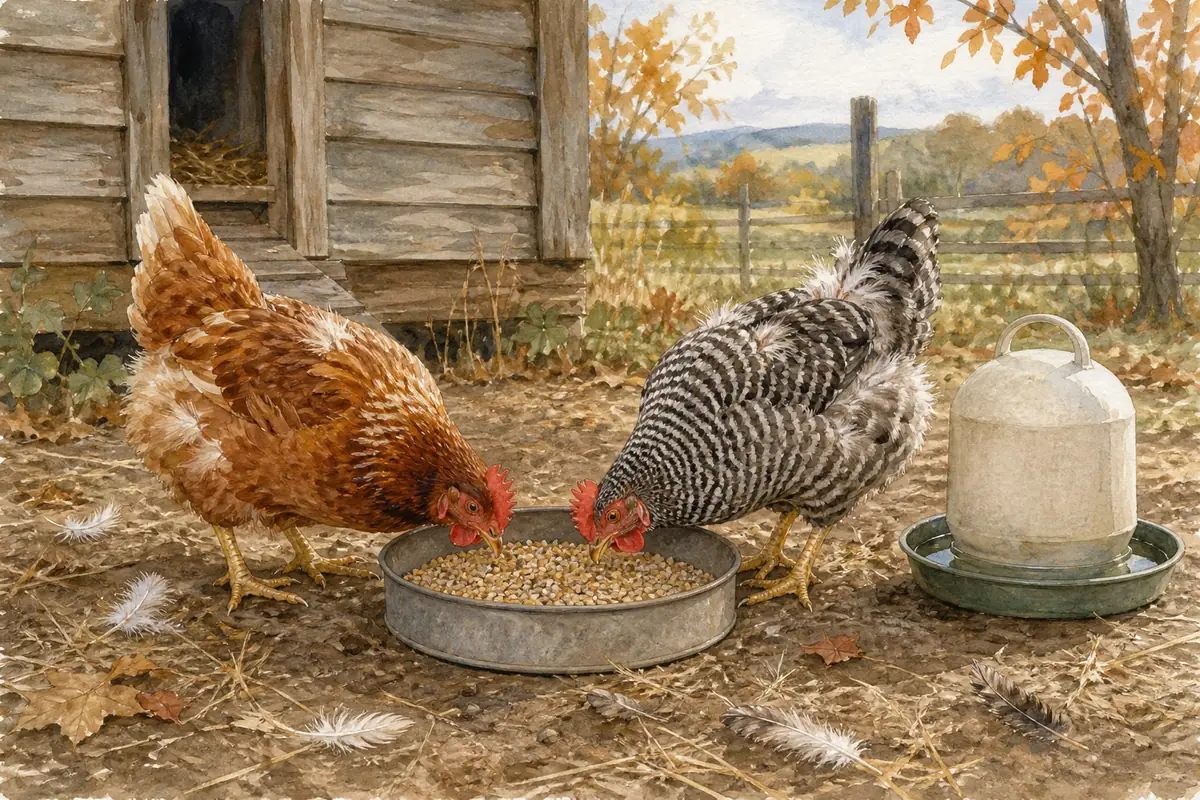
Keep a complete, balanced ration at the center of the diet. Feed formulated for chickens provides a steadier combination of protein, vitamins and minerals than scratch grains alone.
Do not let table scraps, bread, corn or treats replace the main ration. A hen that fills up on unbalanced extras may eat less of what her body needs to build new feathers.
Clean water is equally important. Check the waterer every day and place it where mud, leaves and droppings cannot easily contaminate it. A properly hydrated hen will generally eat better and cope more easily with seasonal changes.
If you change the feed, do so gradually. The goal is not to add many supplements, but to offer a simple, consistent and suitable base. For more guidance, see What Can Chickens Eat? Safe and Unsafe Foods.
How can you help a molting hen naturally?
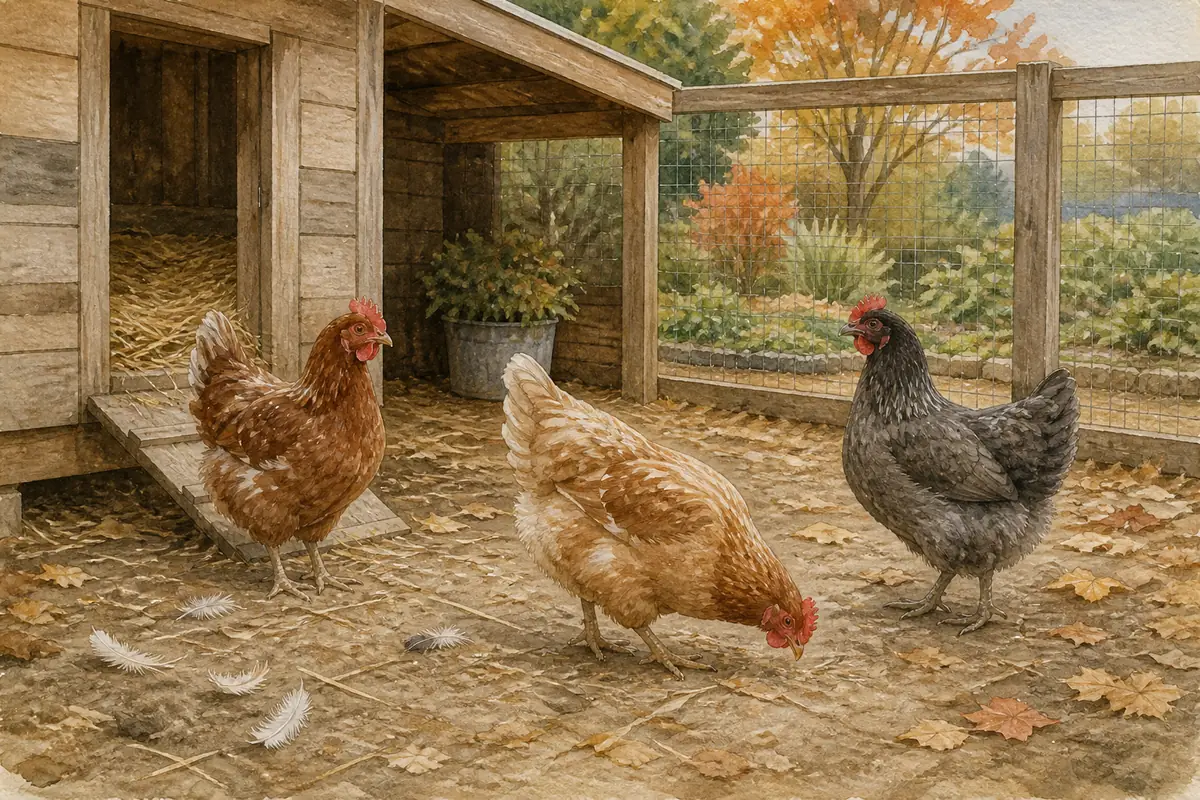
The most helpful steps are often the simplest. Keep the coop dry, clean and well ventilated without creating a direct draft over the roosts. Clean bedding prevents fragile new feathers from constantly rubbing against wet or dirty surfaces.
Limit unnecessary changes as well. This is not the best time to redesign the whole coop, introduce several new birds or handle hens repeatedly. Growing feathers can be sensitive, so leave a hen alone when she does not want to be picked up.
Make sure every bird can easily reach the feed and water. A quieter hen may be pushed away from the feeder. Adding a second feeding point can reduce competition without making your routine complicated.
How can you tell molting from another feather problem?
Not every case of feather loss is a molt. A very localized area that stays bare may result from pecking, rubbing, mating or an unsuitable setup. Significant itching and unusual agitation may instead direct your attention toward parasites.
During a normal molt, feathers are generally found in several areas and fresh plumage gradually appears. The skin should not be covered in injuries. The hen also keeps her essential habits: eating, drinking, walking and joining the other birds.
Pay particular attention to:
- the location of bare areas;
- the appearance of new feathers;
- the condition of the skin;
- pecking within the group;
- the hen’s activity and appetite;
- the condition of the roosts, nest boxes and bedding.
If feather loss is accompanied by wounds, marked weakness, refusal to eat or a major behavior change, it no longer resembles a simple molt. Prompt observation and knowledgeable advice will help identify a response suited to the actual cause.
When will hens start laying again?
Laying usually resumes after feather regrowth, but not necessarily as soon as the plumage looks complete. In fall, the days continue to shorten, and reduced daylight may extend the laying pause into winter.
Age also affects the return of eggs. A young adult may resume fairly regularly, while an older hen may lay less often than before. Rather than choosing an exact date, follow each hen’s overall condition and the pattern of the group.
A simple record makes observation much easier. Note molt dates, egg numbers, feeding changes and unusual events. After a year, these details become a useful reference for understanding the natural rhythm of your coop.
Mistakes to avoid during chicken molting
Some well-intentioned actions can make this period more difficult:
- Changing the entire diet suddenly. A gradual transition is easier for the hens.
- Giving too many treats. They can reduce consumption of the complete ration.
- Handling the hens frequently. New feathers are sensitive while growing.
- Assuming every bare patch is a molt. Location, skin condition and behavior provide important clues.
- Expecting every hen to follow the same schedule. Each bird has her own rhythm.
- Trying to restart laying immediately. Renewing an entire coat of feathers is already demanding work for the body.
Conclusion
Chicken molting is a normal stage that renews a hen’s plumage before the cold season. It may last several weeks, change her appearance and temporarily interrupt laying. A complete ration, clean water, a dry coop and a calm routine provide the essential support.
By watching the shed feathers, new growth, skin, appetite and behavior, you will quickly learn to distinguish a normal molt from unusual feather loss. This simple habit helps you care for the group confidently without intervening unnecessarily.
Which of your hens usually begins molting first?