An occasional peck is part of life in a chicken flock. Hens recognize one another, defend a place at the feeder and establish a social order. Trouble begins when one bird is chased repeatedly, kept away from food, stripped of feathers or injured.
There is no single cause of chickens pecking each other. It may begin after a newcomer arrives, when the run has bottlenecks, when one feeder is easy to guard or when irritated skin attracts the flock’s attention. The best response is to protect the victim immediately and then identify what keeps the behaviour going.
In many mild cases, these checks and corrections can be handled at home with ordinary coop equipment. The goal is not to punish one bird. It is to calm the flock and restore every hen’s access to water, feed, rest and normal foraging behaviour.
Normal pecking order or harmful pecking?
A normal social correction is usually brief. One hen pecks, the other moves away and both return to ordinary activity. The lower-ranking bird can still eat, drink, scratch and reach the roost.
Pecking becomes concerning when you see one or more of these signs:
- the same hen is chased repeatedly;
- she hides or will not join the group;
- one bird guards the feeder, waterer or coop entrance;
- feathers are pulled out rather than merely displaced;
- skin becomes red, raw or bloody;
- several birds join the attack;
- the victim loses weight, stays still or stops drinking.
Visible blood changes the priority. A small wound can attract more pecks and turn a local conflict into a flock-wide problem.
The first ten minutes: protect before diagnosing
1. Move the injured hen to safety
Place her in a clean, dry and secure pen with her own water and normal feed. When possible, keep her near the flock behind fine wire so she remains visible without being reached. Complete isolation for a long period may make her return more difficult.
2. Look at the skin without layering on products
Part the feathers gently. For a superficial scrape, rinse away dirt with sterile saline or clean lukewarm water, then keep the area clean and dry. Do not apply alcohol, concentrated hydrogen peroxide, essential oils, improvised coloured products or human creams unless they are clearly appropriate for poultry.
A deep or gaping wound, an injury beside the eye or vent, bleeding that continues, difficulty walking or a hen that no longer drinks requires prompt qualified help.
3. Watch the flock for fifteen minutes
Note which bird chases, where it happens and what resource is nearby. Watch the feeder, waterer, doorway, nest boxes and roost. A short observation often reveals more than a long list of remedies.
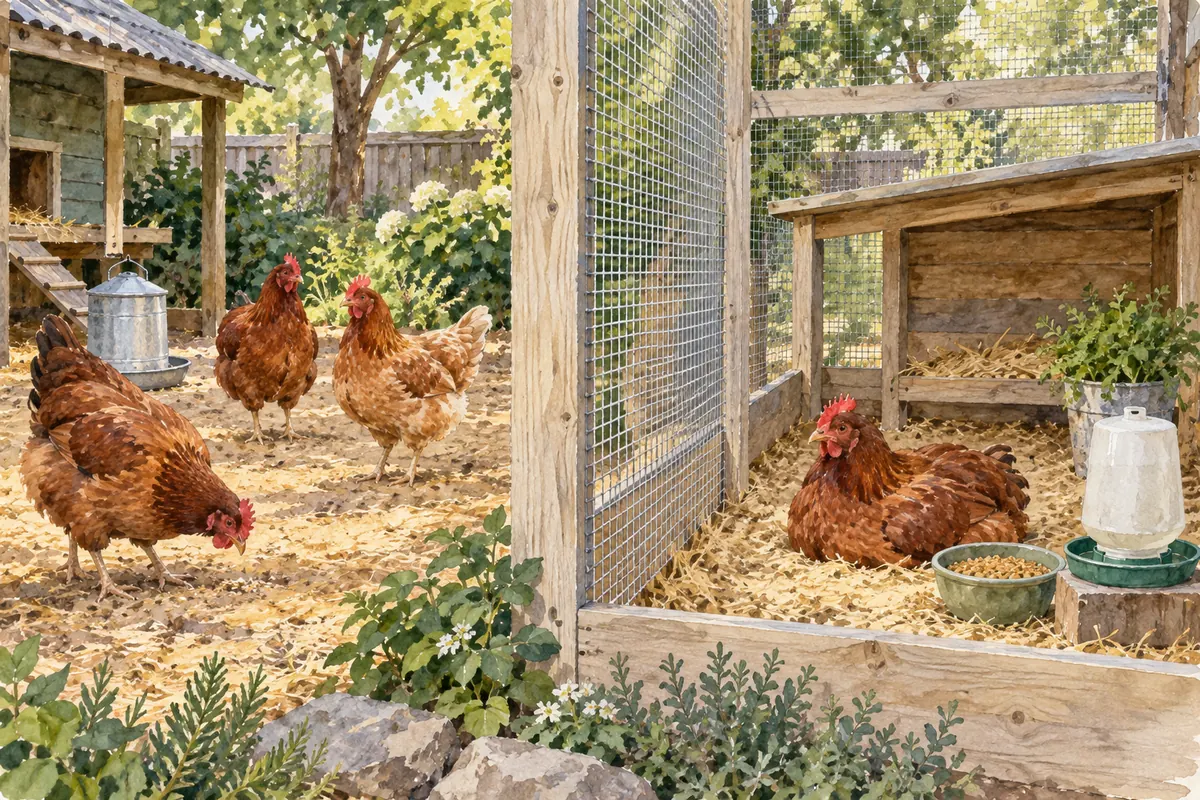
An adjacent protected pen keeps the victim safe while reducing her separation from the flock.
Eight common causes of chickens pecking each other
1. A disrupted pecking order
A new hen, a hen returning after an absence, a change of run or the loss of a flock member can alter the social balance. Brief corrections may occur, but a newcomer must not be trapped or kept away from resources.
If the problem began after an arrival, return to a see-but-don’t-touch setup and short meetings. The full process appears in Introducing New Chickens: A Gradual, Safer Method.
2. A layout that prevents escape
Total floor area is only part of the story. A large run can still be difficult if it has one narrow passage, no visual barriers and corners where a hen can be trapped.
Create at least two routes between important areas. A secure board, a low stable pallet, a solid panel or carefully placed branches can interrupt a dominant hen’s view and provide a way around. Avoid hiding places with only one exit.
3. One resource that is easy to guard
A full feeder does not help a lower-ranking hen if she is afraid to approach it. The same problem can affect water, nests, dust baths and roost space.
Add a second feeding and watering point, far enough away that one hen cannot supervise both. Watch the coop doorway in the morning as well. One bird may block it even when the outdoor run is spacious.
4. Too little scratching and foraging activity
Chickens naturally spend a large part of the day exploring the ground. On an empty, hard or muddy surface, that pecking drive may be redirected toward flock mates.
A dry scratching area, clean leaves, low logs, a dust bath and a simple rotation of familiar objects can redirect activity. See Chicken Enrichment Ideas: 7 Simple Ways to Improve the Run. Enrichment never replaces adequate space or complete feed.
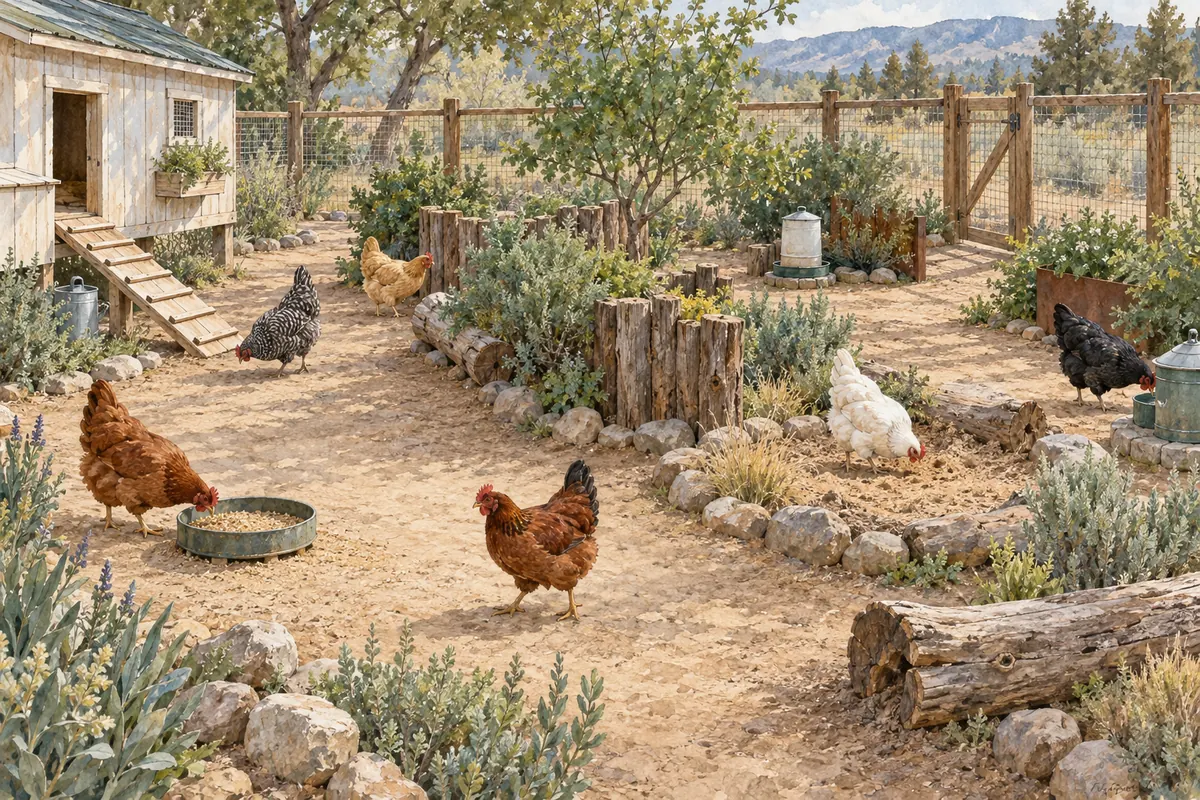
Distributed resources and visual barriers make it harder for one bird to block another.
5. An unbalanced diet or too many treats
A complete feed matched to the birds’ age should remain the foundation. When bread, corn, scraps or treats fill too much of the crop, hens may eat less balanced feed.
Return to a simple routine first: complete feed, clean water and enough access for every bird. Do not try to solve the problem by randomly adding protein, salt, vitamins or several supplements at once. You will not know what helped, and an excess may create another imbalance. What Can Chickens Eat? provides additional guidance.
6. Heat, harsh lighting or abrupt change
Heat, very bright lamps, overly long lighting, unusual noise or a sudden routine change can make the flock more restless. Check for shade, fresh air without a direct draft, available water and a calm period of darkness.
Do not redesign the whole coop on the same day. Correct the most obvious factor first and observe. Gradual improvement is easier to interpret than several simultaneous changes.
7. Parasites, molt or repeated mating
A bare patch does not prove that another hen pulled the feathers. Normal molt produces fallen feathers and new pin feathers. Parasites may cause itching. A very active rooster can wear feathers from the backs and necks of certain hens.
Look at the skin, the location of feather loss and nighttime behaviour. Compare the signs with Chicken Molting and Chicken Mites before blaming a flock mate.
8. A visible injury and learned behaviour
A small red area, a broken feather with a little blood or irritation near the vent can attract pecks. One bird begins and others copy the behaviour. The longer it continues, the harder it becomes to interrupt.
Protect the victim immediately and correct the original injury source: protruding wire, rough roost, cramped layout, repeated mating or established feather pulling. If one hen consistently initiates attacks, place the aggressor in an adjacent pen for a short period after securing the victim. Reintroduce her gradually and supervise.
What the location of missing feathers may suggest
These clues guide observation but do not provide a diagnosis by themselves.
| Area or situation | First things to check |
|---|---|
| Head and neck | Pecking order, feeder access, newcomer |
| Back and base of neck | Flock-mate pecking, repeated mating, rubbing |
| Tail and vent | Wound, irritation, harmful pecking, bright nest |
| Several areas with new pin feathers | Possible normal molt |
| Scratching and nighttime restlessness | Parasites and coop inspection |
| One hen loses weight and hides | Blocked resources or a separate health problem |
A seven-day home action plan
Day 1 — Protect and record
Move the victim to safety, photograph the bare areas for comparison and observe the flock. Add a second feeding and watering point immediately.
Day 2 — Correct routes and resources
Remove dead-end corners, spread resources apart and add one stable visual barrier. Confirm that every hen can enter, leave and reach a roost without passing the same dominant bird.
Day 3 — Return to a simple feeding base
Offer the regular complete feed and clean water. Reduce treats during observation and avoid unnecessary new supplements.
Day 4 — Check skin and housing
Inspect the birds in good light. If they are itchy, inspect beneath roosts after dark as well. Check wire ends, screws, fencing and rough surfaces.
Day 5 — Give the hens something to search and scratch
Create a dry scratching area with clean bedding, untreated dry leaves or a little dry straw. Scatter part of their usual ration in two or three places within this material so several hens can search at the same time, without adding extra treats.
You can also provide a dry dust bath, a low stable log or a blunt branch laid on the ground. Start with one or two items, watch whether chasing decreases and move them occasionally to renew interest. Do not crowd the run: keep routes wide and, when possible, leave two ways around each feature so a lower-ranking hen can avoid the others without becoming trapped.
Days 6 and 7 — Try a supervised meeting
If the skin is clean, the hen eats well and the flock looks calm, arrange a short meeting in the most open area. End it if chasing becomes continuous. A longer separation is safer than a forced return.
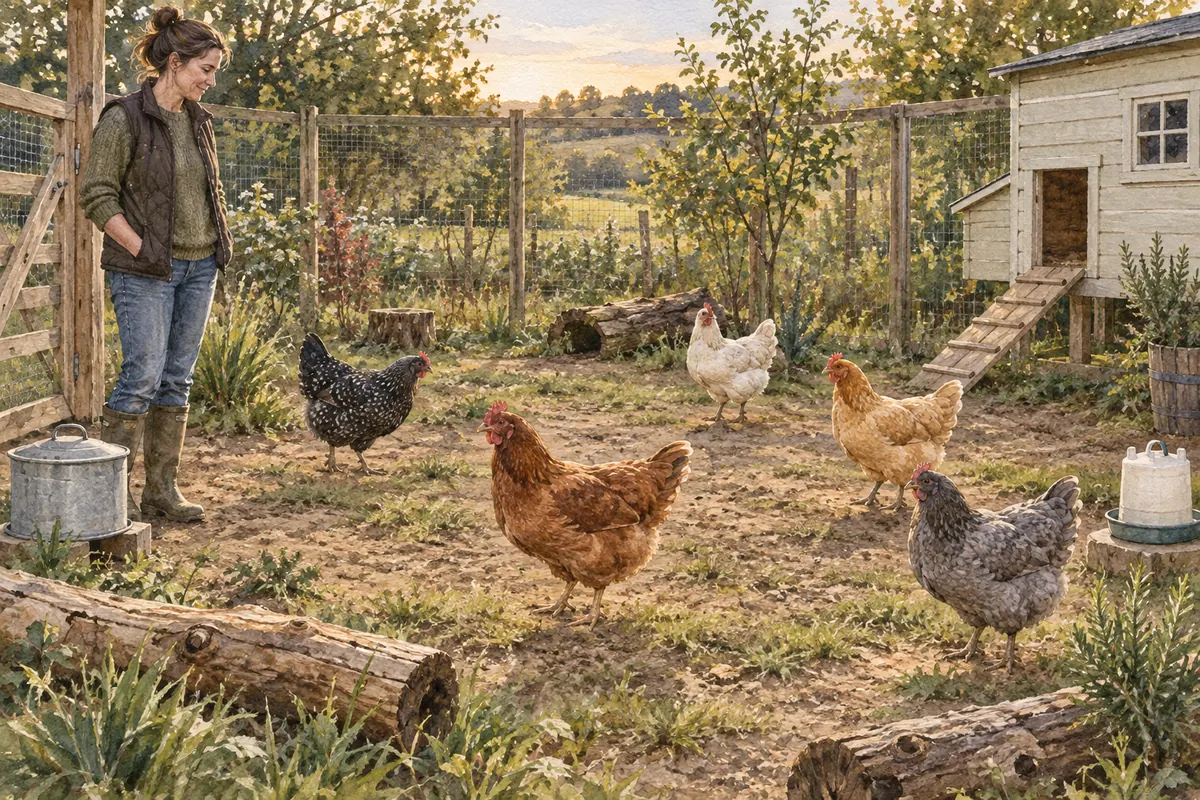
A short supervised meeting tests the flock before the hen returns full-time.
How can you tell whether the plan is working?
Look for observable progress rather than perfect harmony:
- the victim leaves her hiding place;
- she reaches water and feed without being driven away;
- chases are shorter and less frequent;
- no new feathers are pulled;
- skin remains clean and begins to close;
- hens use several parts of the run;
- each bird finds a nighttime place without constant displacement.
Keep duplicate resources in place for a while. Removing them after the first calm day can recreate the competition that started the problem.
What to avoid
Do not hit, shake or chase the dominant hen. She will not understand the punishment as a lasting rule, and flock stress may increase.
Do not cut or file a beak yourself. This can cause pain, bleeding and difficulty eating without correcting the cause. Do not use a bitter product, dye, harsh disinfectant or medicine unless its label clearly suits poultry and the intended area.
Do not return a hen with red or injured skin directly to the flock. Temporary protection and environmental correction matter more than a quick reunion.
When home care is not enough
Seek prompt qualified help for a deep wound, a prolapsed vent, an eye injury, bleeding that will not stop, inability to stand, refusal to drink or marked weakness. Reconsider the diagnosis when several birds continue losing feathers despite corrections or when a wound becomes infected.
Before paying for a costly consultation, a farm cooperative, government agriculture service, extension agent or local poultry association may be able to identify a low-cost management issue. Prepare photographs, the birds’ ages, their feed and a timeline of the problem.
Protect the victim and correct the flock
To stop chickens pecking each other, remember this order: protect the victim, observe the flock, distribute resources, correct the layout, check feed and skin, then arrange a gradual return. One product rarely solves the problem. Improvement comes when the lower-ranking hen can eat, drink, move and rest without being blocked.
Today, watch your flock beside the feeder for fifteen minutes. You may see exactly where the tension begins.
Keep exploring this world
Chicken Water in Winter: How to Keep the Waterer from Freezing
Does your chicken waterer freeze every morning? Compare options with and without electricity, plan water changes and prepare a backup for cold spells.
Read the article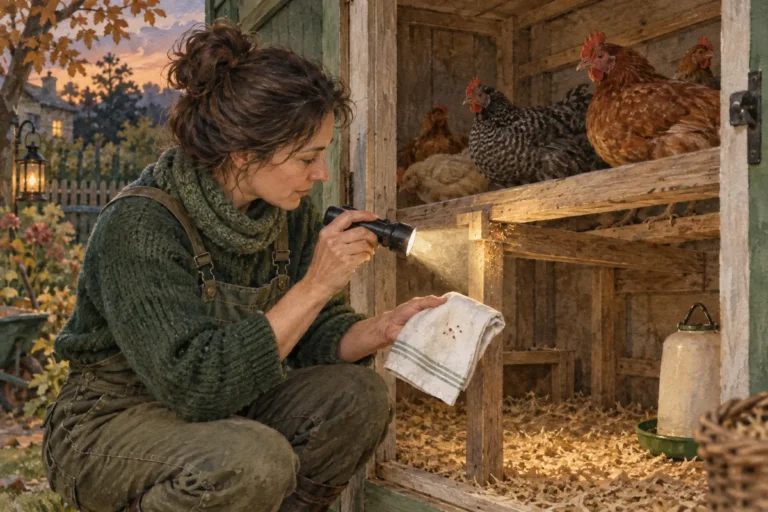
Chicken Mites: 7 Warning Signs and a Practical Home Treatment Plan
Seven warning signs of chicken mites and a practical do-it-yourself plan to clean, treat and monitor the coop.
Read the article
How to Predator Proof a Chicken Coop: 9 Checks Before Dark
Nine practical checks to find weak points, reinforce the run and keep your hens safe before nightfall.
Read the article