You open the coop door and your hens start clucking. A little later, another hen makes a series of calls near the nest box. Is it a familiar habit, a call to the flock or something you should check? Listening to your chickens becomes much more useful when you also watch what they are doing at the same time.
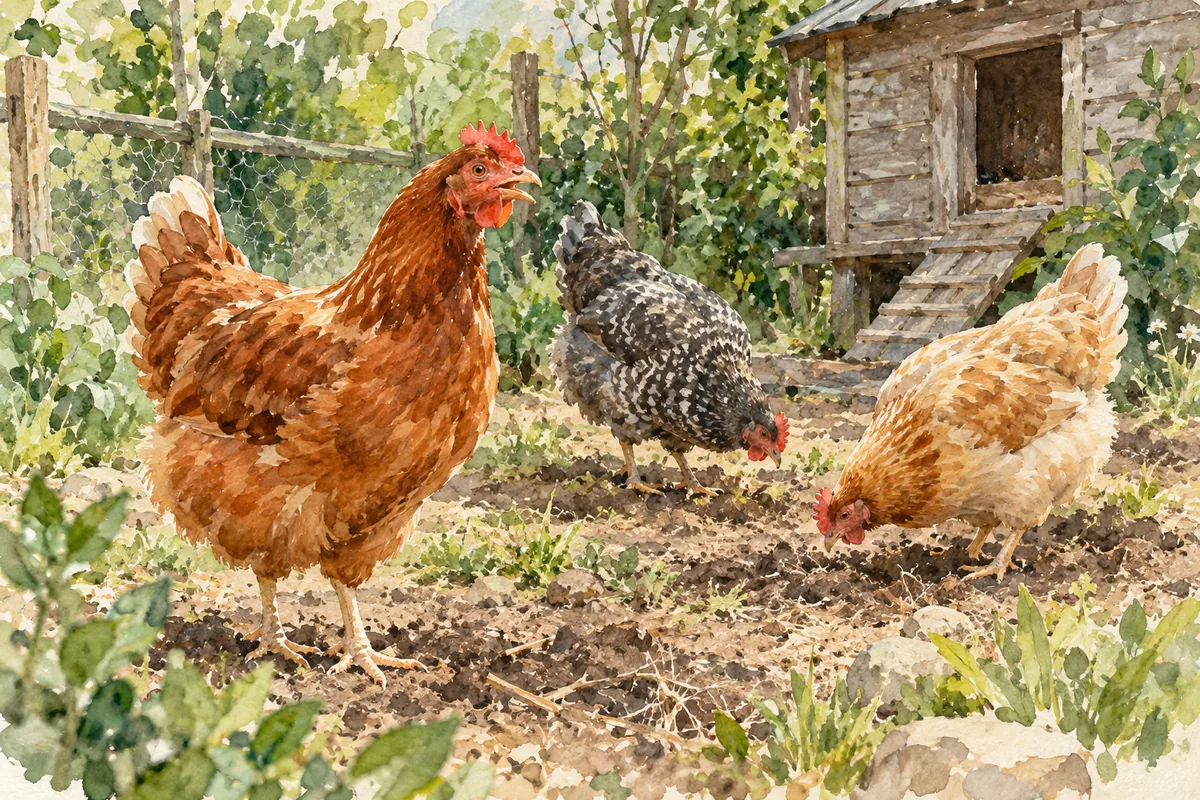
A chicken makes more than one kind of sound. Chickens have different vocalizations: sounds that play a part in how they communicate. People sometimes use the word “song,” especially around egg laying. To understand your small flock, it helps to distinguish calls and clucks from sounds associated with breathing.
The aim is not to hear a sentence in every sound. It is to learn your chickens’ habits and notice changes that deserve your attention. A good first question is: what was happening just before this hen started calling?
Start with the situation, not an imitation of the sound
Writing “cluck-cluck” does not tell you which call you are hearing. Rhythm, pitch and volume vary from one hen to another. Age, sex and the situation matter too. University guides describe groups of vocalizations, rather than a dictionary you can apply automatically to every coop. [1]
Look at three things together: the sound, the chicken’s posture and what has just changed. A hen walking around and pecking calmly offers different clues from a flock that suddenly freezes and looks in the same direction. A loud sound can accompany ordinary behaviour; a quiet one may catch your attention because it is new.
Over a few days, take a quiet moment to listen before going straight into the run. You will find it easier to notice familiar sounds during foraging, visits to the nest boxes and reactions to your arrival. These short observations give you a much better basis for comparison than a video you have heard only once.
Clucking around egg laying
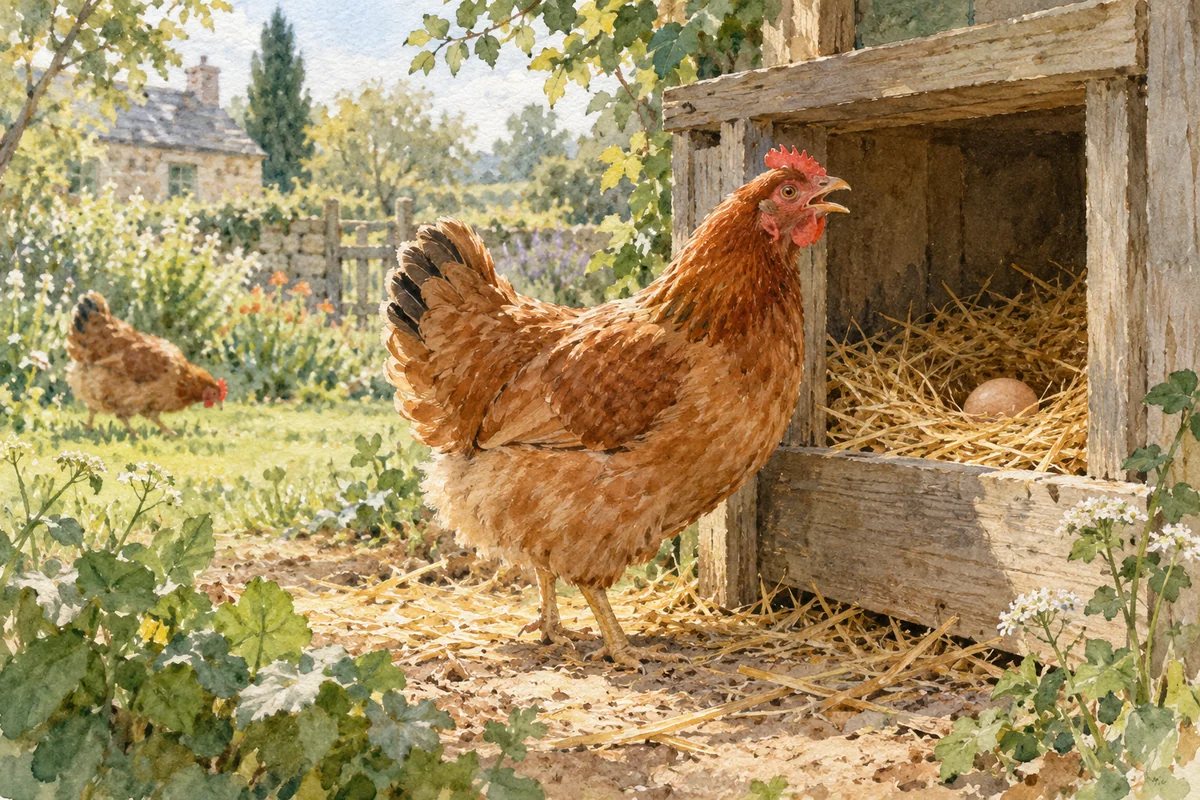
A hen may call before entering a nest or after laying an egg. The post-laying cackle often consists of several short sounds followed by a longer one. It is sometimes called the “egg song.” This pattern is described in the University of Kentucky’s poultry education resources. [2]
If you hear this sequence near a nest box, simply watch whether the hen has just come out and is returning to her usual activities. Avoid picking her up, chasing her or disturbing other laying hens to confirm your guess. You can collect the eggs at your normal time.
Do not turn this into a rule that “she is singing, so she must have just laid an egg.” Context still matters, and a sound alone cannot confirm laying. Be careful, too, about assuming she is celebrating her egg as a person might. It is an appealing interpretation, but it goes beyond what your observation establishes.
Calls that help chickens stay together and find food
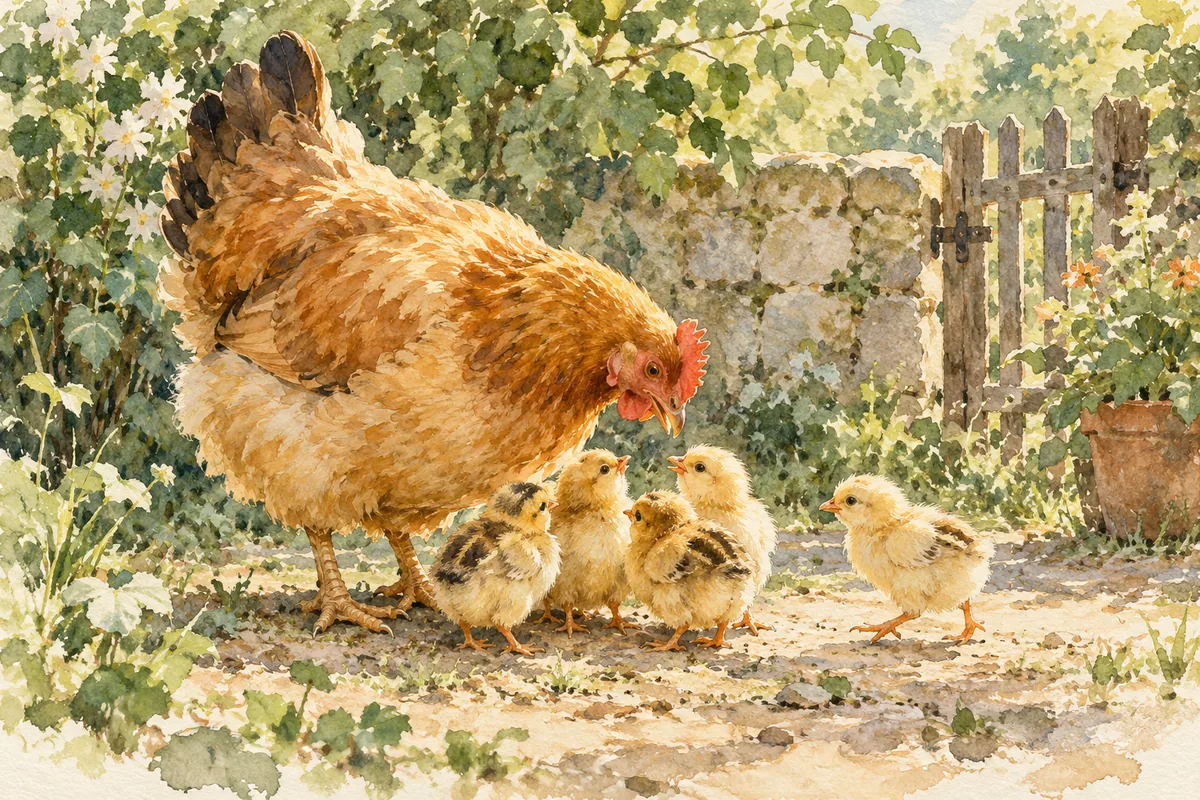
Vocal communication helps chickens keep in contact as they move around or lose sight of one another. A mother hen uses calls to gather her chicks, for example. She can also guide them towards food. RSPCA Australia explains that these sounds work alongside postures and visual signals in the flock’s social life. [3]
When watching a hen with chicks, look at how the chicks respond. Do they come closer, gather around her or start exploring again? The movement that follows a call is often more informative than your attempt to imitate the sound.
In an adult flock, watch access to food and water as well. If one hen is repeatedly pushed away from a feeder or drinker, that practical problem deserves attention even if you cannot name her calls. Several well-spaced access points can reduce competition; above all, check that lower-ranking chickens can actually use them.
Sudden agitation: look before you approach
A sharp call followed by chickens freezing, gathering together or seeking cover may be an alarm. Hens and roosters do not make exactly the same sounds in every situation. Roosters’ alarm calls have been studied in particular, but you do not need to identify a predator perfectly by ear to respond usefully. [1]
Stop and look around: an animal near the wire, a passing shadow, something that has fallen or an unfamiliar person. Check that the run is secure and give the chickens a clear route to shelter. Running towards them and shouting may add to the agitation before you understand what has happened.
If things settle down, note what came before the episode. If it happens again, look for a trigger: a passing dog, a slamming door or someone walking near an exposed part of the run. Your observation can then lead to a practical improvement, rather than simply a label for the call.
A persistent call is a reason to check the surroundings
Research links some calls with frustration, including situations in which access to an expected resource is blocked. This does not mean that every complaining sound has the same cause. A call recorded during an experiment cannot capture everything going on in a hen’s life in your garden. [1]
Before handing out treats to quiet the flock, check water, the usual feed, access to nests and interactions between chickens. A full feeder may still be out of reach for a hen that is regularly chased away. Likewise, an open door does not guarantee that a cluttered passage is easy to use.
Address what you can actually see, then watch whether the situation improves. You do not need to withhold food, separate a hen or play recorded calls to “test” her response. Everyday life already offers plenty of opportunities to learn.
Rattling or laboured breathing is not a call to decode
New breathing noises, repeated coughing or laboured breathing call for a different response. Watch appetite, activity, movement and the chicken’s general condition too. A hen that stays apart and looks listless is not necessarily well simply because she is quiet. [4]
Contact a veterinarian promptly if a chicken has difficulty breathing, shows a marked change or has persistent signs of illness. If several chickens become ill or sudden deaths occur, seek guidance immediately from your veterinarian and local animal health authority; do not move chickens to another flock. A recording may help you describe a noise, but it cannot establish a diagnosis on its own. [4] [5]
| What you hear | What to watch | Your next step |
|---|---|---|
| Clucking near the nest | A hen entering or leaving the nest box, then returning to her activities | Observe without disturbing the laying hen. |
| A mother hen calling | Chicks approaching or following her | Check that every chick can reach its mother. |
| A sharp call and a flock that freezes | Changes nearby and access to shelter | Look around and secure the area calmly. |
| Unfamiliar breathing noises | Breathing, activity, appetite and the other chickens | Seek veterinary advice promptly. |
What the research actually tells us
In a study published in 2024, 194 people listened to calls recorded in situations involving the anticipation of a reward or its absence. They were able to distinguish these contexts better than chance. It is an interesting finding about how we perceive vocalizations, rather than proof that we can translate every chicken sound. [6]
The most useful way to apply this idea is simple: listen more closely, observe before interpreting and compare with your own chickens’ habits. Whether you are in Canada, France, Japan or Australia, climate and keeping conditions differ. Your most useful reference is what you see in your own flock and its surroundings.
A small habit to try this week
Choose one moment, such as your morning visit. Note which hen or group is involved, what happens before the sound and what the chickens do afterwards. If the sound returns, compare the situations. You might notice a regular call near the nest, a reaction to your arrival or a resource that is hard to reach.
Understanding chicken calls starts with less guesswork and more attention. Finding the perfect name for a cluck is less useful than noticing what is happening and taking the right practical step.
Roger Grenier
Sources and further reading
Sources consulted on 18 October 2026. The examples and practical wording were created for this article.
- University of Maryland — Relationships Between Chicken Vocalizations and Health, Behavior, and Welfare (2021)
- University of Kentucky / Poultry Extension — Vocalizations of chickens in small and backyard poultry flocks
- RSPCA Australia — How do I help my chickens to get along with each other? (2023)
- USDA APHIS — How to Spot Sickness
- Canadian Food Inspection Agency — Protect your flock from bird flu
- McGrath et al. — Humans can identify reward-related call types of chickens (2024)
Keep exploring this world
Rooster Crowing and Other Calls: How Does He Communicate with His Hens?
From crowing to quiet calls near food, learn to observe how a rooster communicates with his hens.
Read the article
Why Are My Chickens Pecking Each Other? 8 Causes and an Action Plan to Protect the Victim
Is one hen being chased or losing feathers? Separate normal pecking-order behaviour from harmful pecking and follow a practical plan to protect her.
Read the article
Chicken Water in Winter: How to Keep the Waterer from Freezing
Does your chicken waterer freeze every morning? Compare options with and without electricity, plan water changes and prepare a backup for cold spells.
Read the article