Chickens in winter can adapt well to cold weather when they have a dry shelter, fresh air without a direct draft, liquid water and suitable feed. The goal is not simply to “keep the coop warm.” It is more important to control moisture, block the wind and observe the birds regularly.
Before the first hard freeze, walk through your setup using the following ten checks. A few adjustments made in fall can prevent many problems once snow, ice and shorter days arrive.
1. Inspect the roof, walls and doors
Begin by checking the coop on a rainy or windy day. Look for water leaks, damaged boards, gaps around doors and places where drifting snow could enter. Test the hinges, latches and the small door used by the hens.
Repair leaks before freezing weather begins. A cold but dry coop is easier to manage than a slightly warmer shelter where the bedding, walls and feathers remain damp. If snow can build up heavily on the roof, plan a simple way to clear it without damaging the structure.
2. Stop drafts without eliminating ventilation
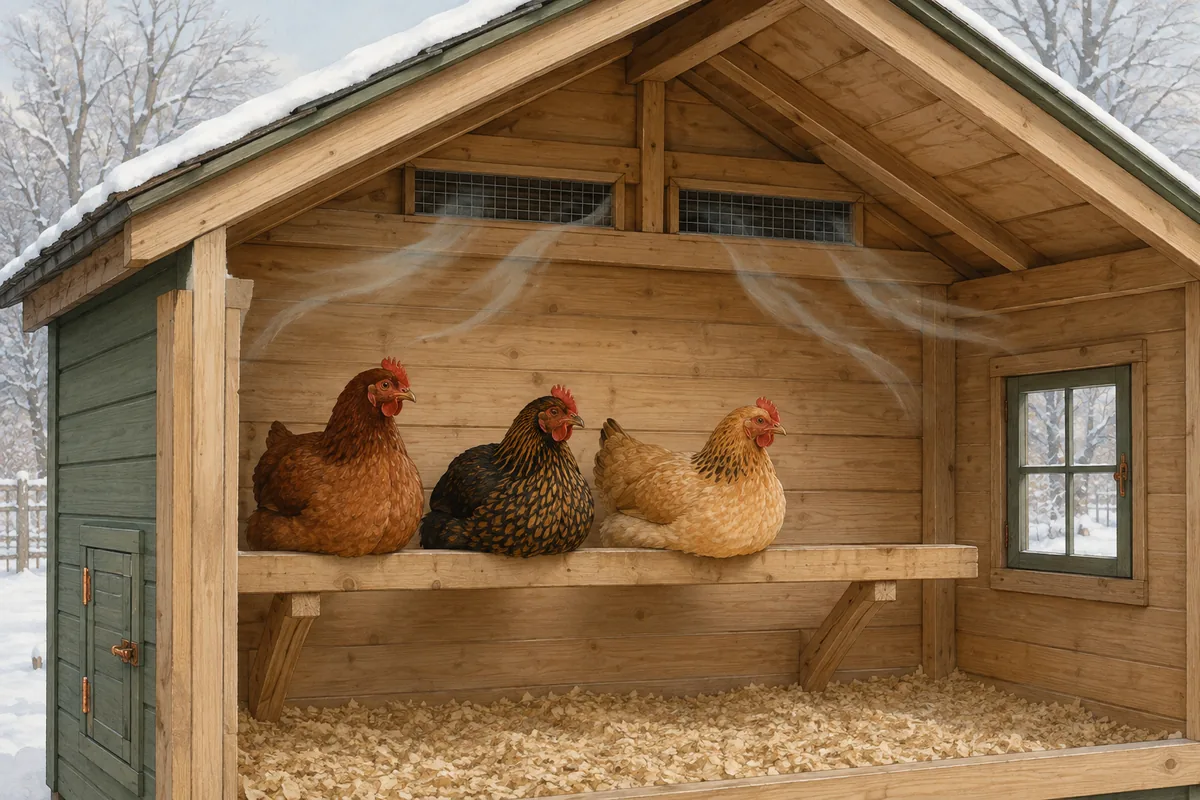
It is tempting to close every opening in winter. However, hens continually release moisture as they breathe, and their droppings add even more. Without fresh airflow, moisture condenses on windows and walls while ammonia odors accumulate.
Seal cracks that direct cold air toward the hens, especially at roost level. Keep high ventilation openings above the birds so humid air can escape without blowing across their feathers during the night.
Use a simple morning check. A strong odor, wet windows or droplets on the ceiling usually mean that you need to clean more often or improve airflow.
3. Prepare clean, dry and abundant bedding
Remove wet patches and accumulated droppings, then add absorbent bedding. Suitable straw or shavings should remain loose and dry rather than becoming matted and damp. Pay special attention to the areas below the roosts and around the waterer.
A deeper layer also helps separate the hens from the cold floor. It does not replace cleaning: whenever the bedding becomes damp or develops a strong odor, remove the soiled material and replace it with a dry layer.
Get 15 free checklists for your chicken coop
To help you remember every essential task, get Roger Grenier’s checklists covering daily care, maintenance, feeding and seasonal checks in one simple PDF guide.
Get 15 free chicken care checklists
Receive Roger Grenier’s practical PDF guide covering daily care, cleaning, feeding and seasonal checks.
4. Check the roosts and nest boxes
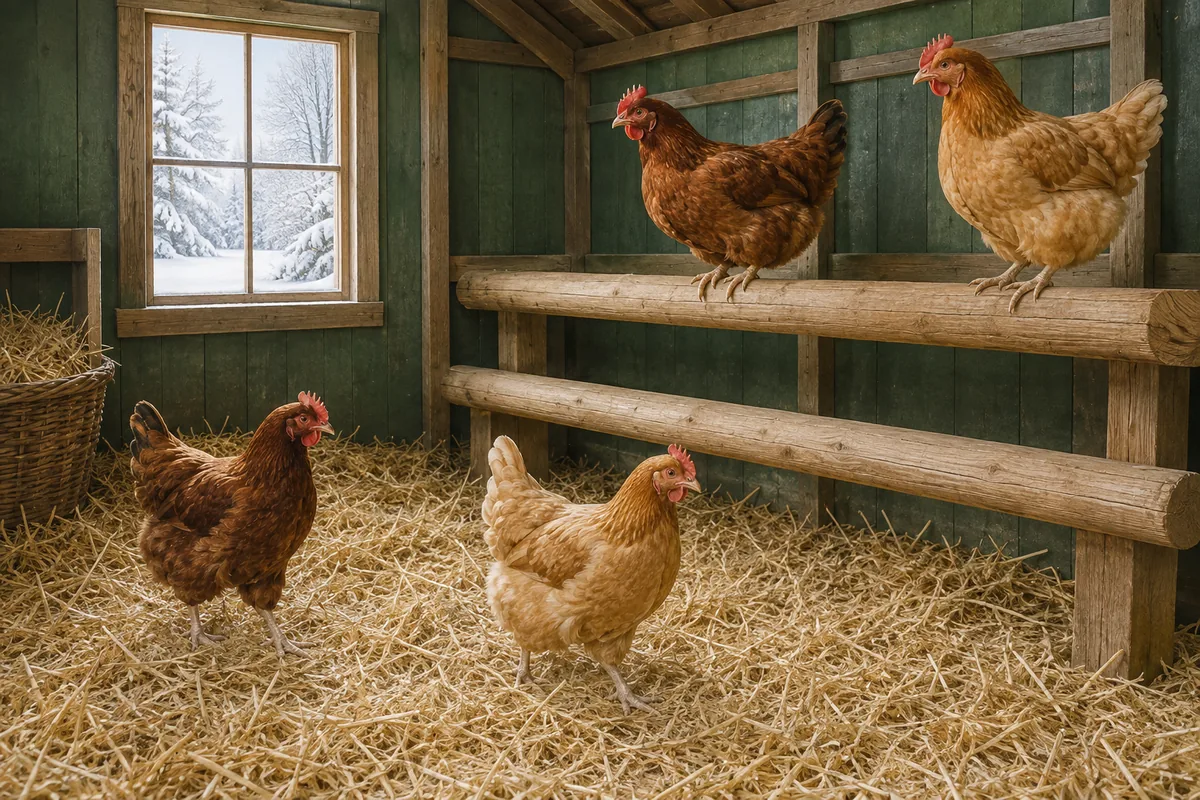
Hens sleep on their feet and cover them with their feathers. Stable wooden roosts that are wide enough allow them to settle comfortably. Avoid metal surfaces that become extremely cold, and make sure every hen has enough space without being forced to crowd tightly.
Nest boxes must also remain dry. Replace damp material and collect eggs more often during freezing weather because an egg left behind can freeze and crack.
5. Keep drinking water from freezing
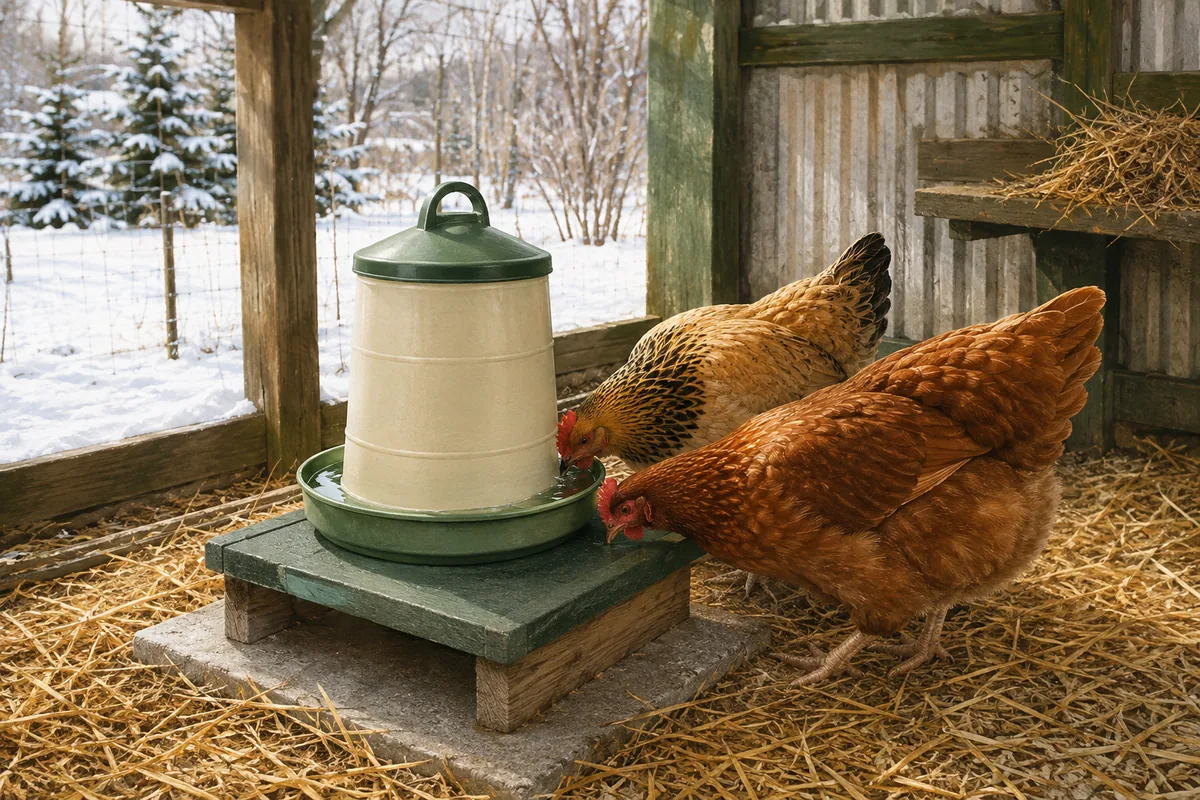
Chickens must always be able to drink clean, liquid water. During freezing weather, check the waterer at least morning and evening, and more often on extremely cold days. Place it on a stable raised base to reduce bedding in the water and prevent spills that increase humidity.
You can replace the water regularly or use a heated waterer designed for this purpose. If you choose an electrical unit, follow the manufacturer’s directions and use a protected outdoor-rated installation. Avoid homemade devices and extension cords lying in snow or bedding.
Snow and ice are not substitutes for drinking water. Even when the hens spend little time outside, they need an easy-to-reach water source.
6. Keep complete feed available to every hen
Cold weather increases the energy hens use to maintain their body temperature. Keep a complete ration suited to their age and stage of production at the center of their diet, and make sure every bird can reach the feeder.
Scratch grains and kitchen scraps may supplement the routine in small amounts, but they should not replace the main ration. Watch quieter hens carefully. In the tighter space used during winter, a dominant bird may keep another away from the feed. A second feeding point can reduce that competition.
For a review of suitable foods and items to avoid, read What Can Chickens Eat? Safe and Unsafe Foods.
7. Create a run protected from snow and wind
Not every hen enjoys walking through snow. Clear a short path and, if possible, cover part of the run to keep the ground drier. A windbreak on the side facing the prevailing wind can make the area much more comfortable without closing it in completely.
Add a few simple activities: a log, a dust bath kept dry, loose bedding to scratch through or a small amount of feed hidden in a clean area. These activities reduce boredom when outdoor time becomes shorter.
8. Strengthen protection from predators and rodents
In fall, small animals also begin looking for shelter and food. Examine the wire mesh, corners, gaps beneath doors and the connection between the coop and the ground. An opening that seemed insignificant in summer may become an easy entrance in winter.
Store feed in a closed container and clean up anything that falls around the feeder. Secure the hens every evening and check the latches after a storm because snow or ice can prevent a door from closing properly.
9. Expect fewer eggs and collect them promptly
Shorter days, molting and the age of the hens can slow or pause egg production. This seasonal decrease does not automatically indicate a problem. Focus on their appetite, activity, feather condition and normal group behavior.
Collect eggs in the morning and again later in the day during a hard freeze. Discard any egg with a cracked shell. To explore the different reasons laying may stop, also read Why Has My Hen Stopped Laying? Causes and Practical Solutions.
10. Watch for signs of cold every day
Observe the hens when they come out in the morning and when they settle on the roost at night. Slightly fluffed feathers help them hold warm air close to the body. Persistent shivering, a very rigid posture, unusual huddling, distressed calls or a hen that remains motionless indicate that you should immediately check her shelter, access to water and feed, and general condition.
Pay particular attention to older, smaller or weakened birds and hens that are still molting. Their feathers may provide less complete protection. If some hens are still losing feathers, read Chicken Molting: Duration, Signs and How to Help Naturally.
Quick checklist before the first cold weather
Before winter arrives, confirm that:
- the roof does not leak and the doors close properly;
- drafts do not blow across the roosts;
- high vents allow moisture to escape;
- bedding and nest boxes remain clean and dry;
- roosts are stable, wide and made of wood;
- water remains liquid and does not spill into the bedding;
- complete feed is accessible to every hen;
- part of the run is clear and sheltered;
- wire mesh and latches resist predators;
- every hen is observed daily.
Winter mistakes to avoid
Some quick solutions create more difficulties than they solve:
- Closing every opening. Moisture and ammonia then remain trapped inside.
- Confusing ventilation with a draft. Air should move above the birds without blowing directly on them.
- Allowing a waterer to spill into the bedding. Spilled water makes the coop damp and cold.
- Improvising heat or electrical wiring. Dust, straw and poorly protected extension cords increase fire risk.
- Feeding mostly scratch grains or scraps. Hens still need a complete ration.
- Waiting for a problem before observing the group. A brief morning and evening check helps you notice changes early.
Conclusion
Preparing chickens for winter does not mean turning the coop into a heated house. The goal is to provide a dry space protected from wind while maintaining good ventilation, liquid water, complete feed and comfortable places to sleep.
Complete these ten checks before the first freeze, then keep a simple morning and evening routine. By watching the water, bedding, coop air and each hen’s behavior, you can adjust care promptly as the weather changes.
Which part of your coop do you still need to check before winter?