Chicken coop bedding needs to absorb moisture, be easy to manage and provide a comfortable floor for your hens. For a beginner, untreated, low-dust wood shavings sold for animal bedding are a practical starting point. Straw and hemp can also have a place, depending on your setup and cleaning routine.
The best choice is not necessarily the most expensive bag or the material your neighbour uses. First look around your coop: where do droppings collect, where does water spill and which corners take longest to dry? Those answers are more useful than a cleaning calendar that assumes every coop is the same.
Chicken coop bedding: three things to check before buying
Look for clean, dry, low-dust material. Read the label: a product intended for animals is easier to identify than workshop waste whose treatments you do not know. Avoid shavings from painted or treated wood and bags that smell mouldy. A low price offers little value if the material is already damp.
Think about storage and removal, too. Can you keep the bag out of the rain? Can your scoop reach under the roosts? If every clean-up requires moving several objects, simplifying the layout may help more than switching products. Keep a small supply of dry bedding ready so you can deal with wet patches immediately.
Wood shavings, straw or hemp: how do you choose?
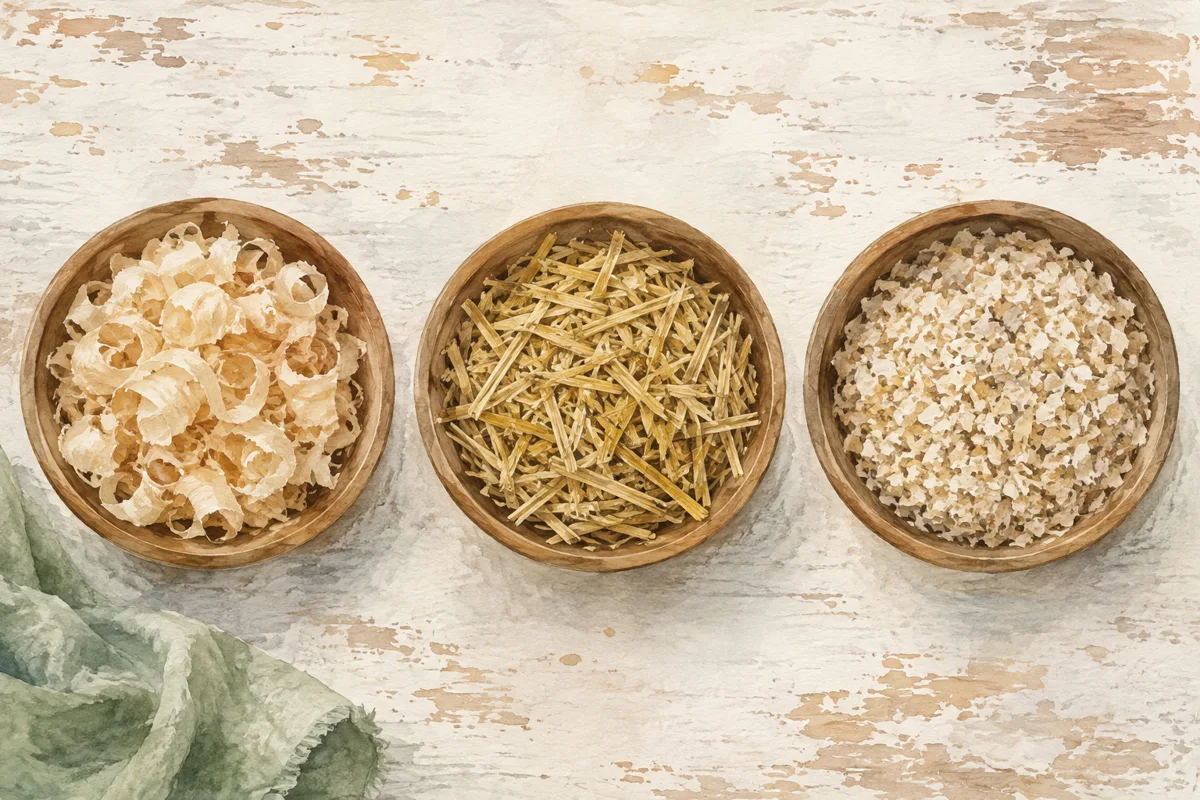
Wood shavings are a common floor bedding choice. Choose low-dust shavings suitable for poultry; pine shavings are among the materials discussed in university resources for small flocks. They are different from very fine sawdust. Their texture makes compacted, damp patches relatively straightforward to spot and remove.
Straw is a familiar nesting material. On the floor, watch for a matted layer that looks dry on top but may hold moisture underneath. Lift it during your checks. Recommendations differ between housing systems: local availability is helpful, but you still need to see how the material performs in your own coop.
Hemp bedding is another option sold for animals. Compare dust levels, the manufacturer’s directions, usable volume and local price. If you want to try it, start with a limited quantity and record what you notice. There is no need to declare one material the winner for every backyard coop.
When should you change chicken coop bedding?
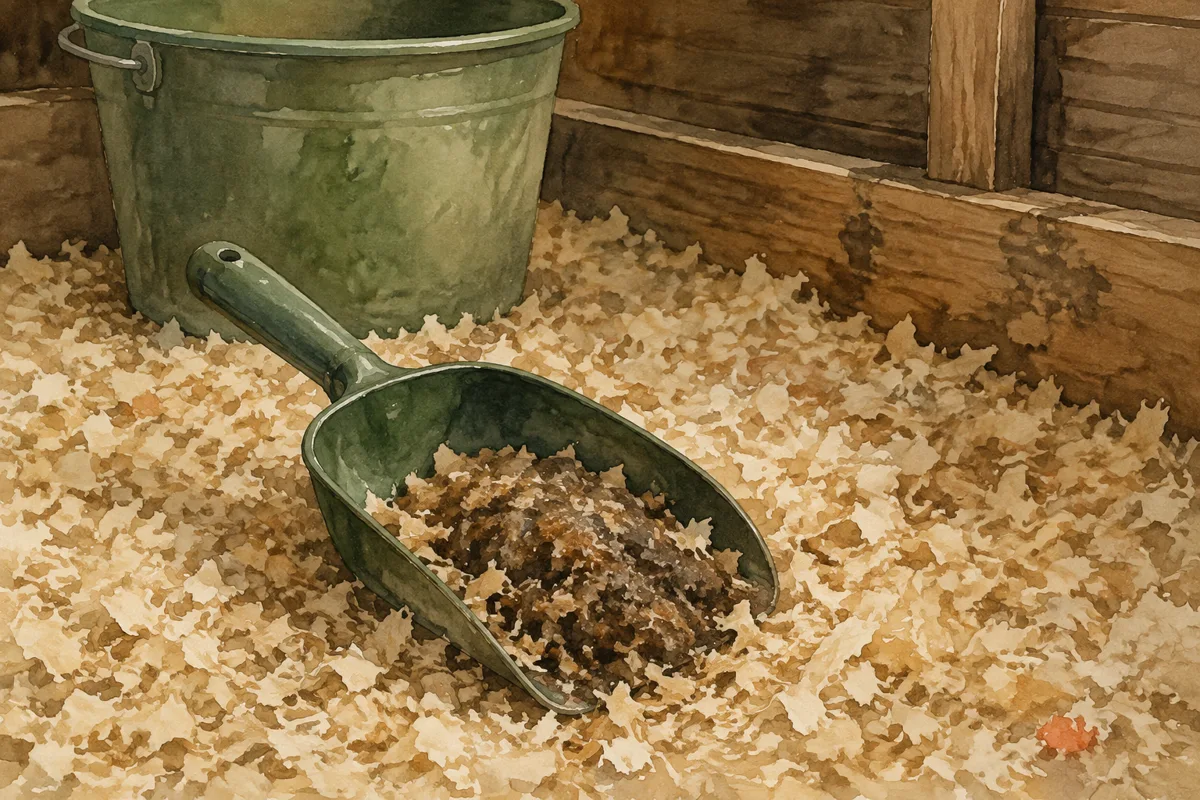
Act on its condition rather than waiting for a fixed date. During your daily visit, look under the roosts, near the waterer and by the entrance. Remove wet or heavily soiled patches, then top up with clean material. A small damp patch needs attention even when the rest of the floor still looks fine.
Plan a more thorough replacement when soiled areas become widespread, bedding remains compacted or moisture persists. A sharp smell is also a reason to check cleaning and ventilation promptly; do not cover it with fragrance. Flock size, time spent indoors and weather help explain why two coops can need different cleaning routines.
To find a workable rhythm, spend a few weeks noting the date, wet areas, bedding removed and fresh material added. One short entry per check is enough. You can then manage your chicken coop bedding according to its actual condition, instead of replacing everything too early or leaving busy areas too long.
What if the same spot keeps getting wet?
Look for the cause before adding another bag. Check the waterer’s stability, splashing, roof leaks and water tracked in from the run. A patch that becomes wet after every rainfall suggests a different problem from a damp ring around the water container. Make one adjustment at a time and check the result on your next visit.
Maintain suitable ventilation above the birds rather than closing every opening to retain heat. Our article on winter chicken care covers seasonal checks. Piling dry material onto a soaked base without addressing the cause is not a lasting solution.
Should the floor and nest boxes use the same material?
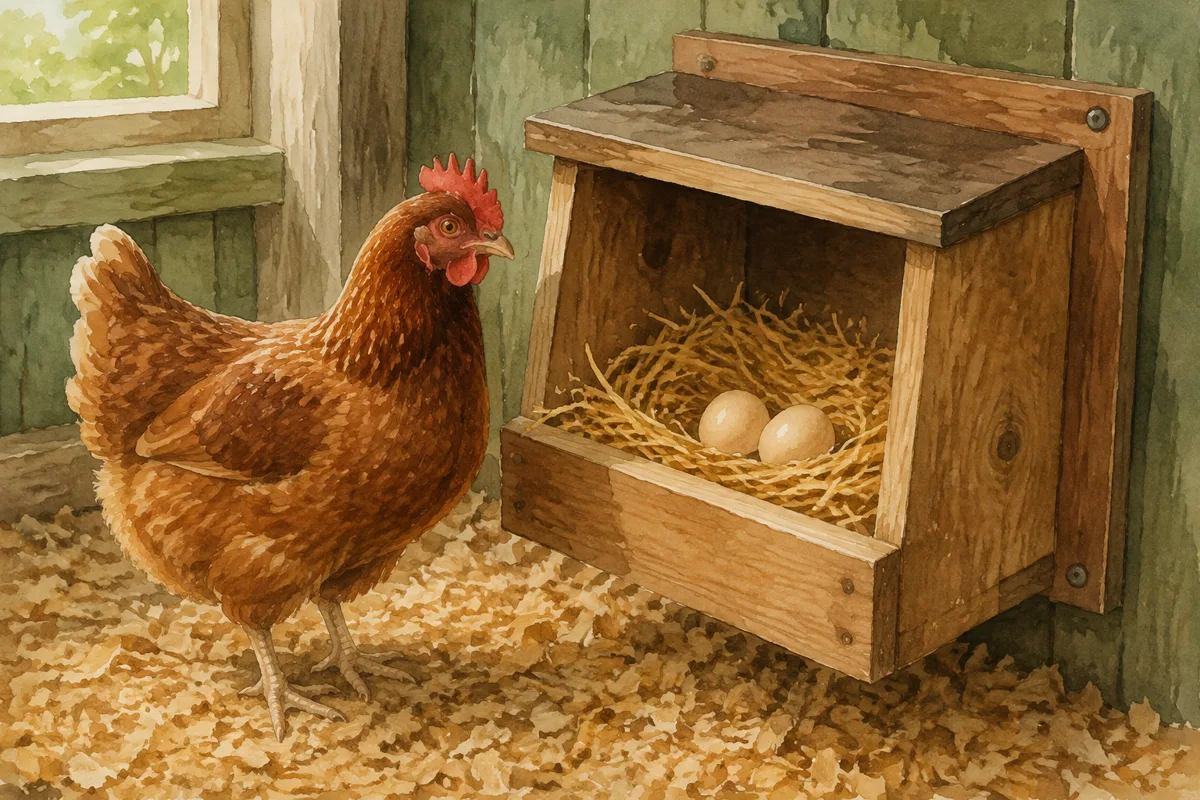
The two areas serve different purposes. On the floor, aim for material you can maintain easily. In the nest box, clean, soft bedding cushions the eggs; check that it stays in place and does not leave the base exposed. You can use shavings on the floor and straw in the nests if that arrangement works for your hens.
While collecting eggs, remove soiled material and replace any damp nest lining. If an egg breaks, clean the area promptly. A straightforward layout makes these small daily tasks easier to keep up with, especially when the hens spend more time indoors.
A simple routine you can keep
Start with one clearly identified material, store it somewhere dry and inspect high-use areas daily. Gradually adapt your cleaning to what you observe. When trying a different product, compare the work involved and the amount removed as well as the price of the bag.
The best chicken coop bedding is bedding you can keep clean, dry and manageable in your own setup. Which area of your coop currently needs the most attention: beneath the roosts, around the waterer or inside the nest boxes?
Further reading: La Matanie’s backyard chicken guide (French) and university resource on poultry bedding materials.