A predator proof chicken coop begins with one simple idea: a fence that keeps chickens in will not necessarily keep a determined animal out. Lightweight poultry netting can mark the daytime run, but nighttime safety depends on strong openings, secure ground edges, a covered top and reliable latches.
You do not need to turn your garden into a fortress. A methodical inspection lets you correct one weak point at a time. It also makes the evening routine calmer because you know where to look, what to close and which unusual signs deserve attention.
In practice, a predator proof chicken coop is created by removing small entry points and easy-to-open closures before an animal discovers them.
Why a predator proof chicken coop matters before dark
Foxes, coyotes, raccoons, weasels, skunks, rats and birds of prey do not all enter the same way. Some dig, some climb, some lift a simple latch and others reach through an opening. Protection therefore needs to work as a complete system from the ground to the roof.
Locking the hens inside at night is the most important step. A run that is reasonably secure during the day does not replace a solid shelter while the birds sleep. Chickens react more slowly after dark and gather on their roosts, which makes them more vulnerable.
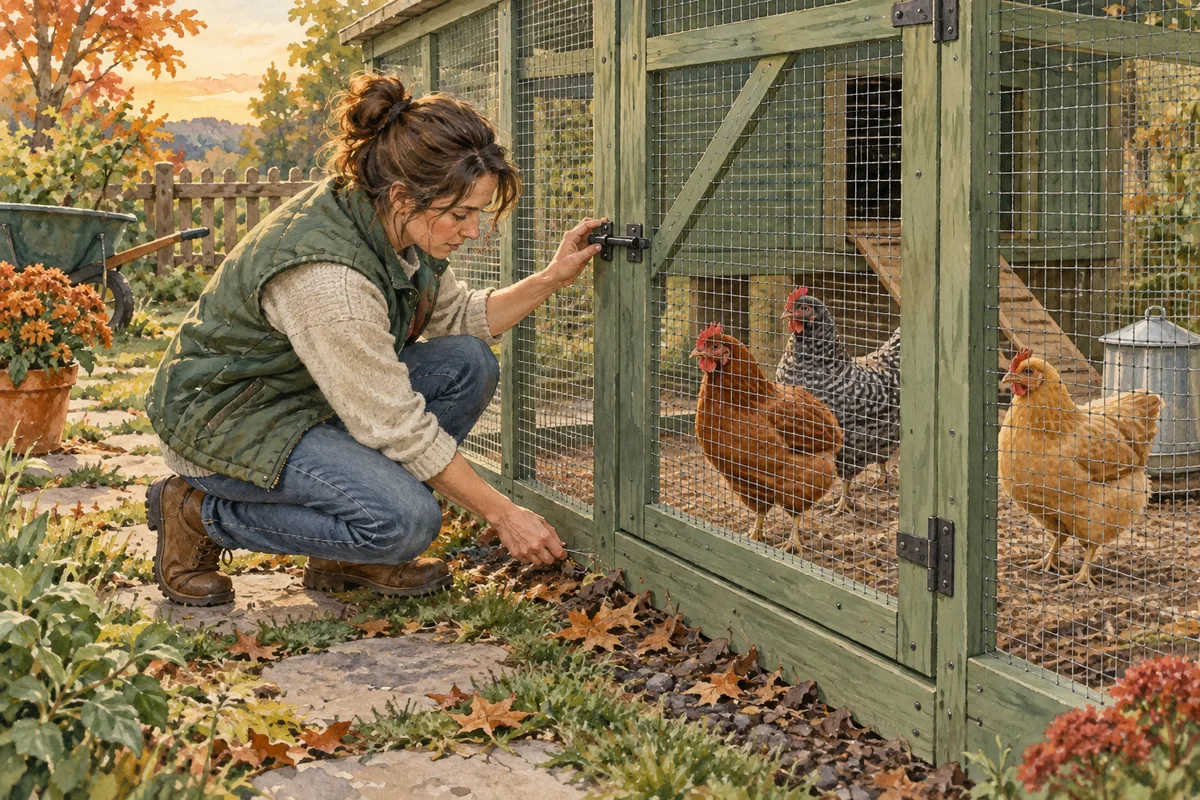
Walk around the enclosure at predator height. Look for a gap beneath a door, a warped board, a rusty fastener, a loose mesh corner or a branch that provides access to the roof. Pull gently on each panel. A section that looks closed from a distance may move under steady pressure.
Build a predator proof chicken coop with these 9 checks
1. Bring every hen inside before nightfall
Count the hens before closing the door. One may have settled under a shrub, behind a bin or in a quiet corner of the run. A fairly regular closing time helps the group develop a routine. The morning and evening chicken coop routine gives you a simple sequence to follow.
2. Reinforce vulnerable areas with welded hardware cloth
Hexagonal poultry netting is mainly designed to keep chickens inside the run; it is not built to withstand every predator. On lower panels, doors, windows and ventilation openings, small-square welded hardware cloth provides a stronger barrier. Openings around half an inch also make it harder for a raccoon or another animal to reach through with a paw.
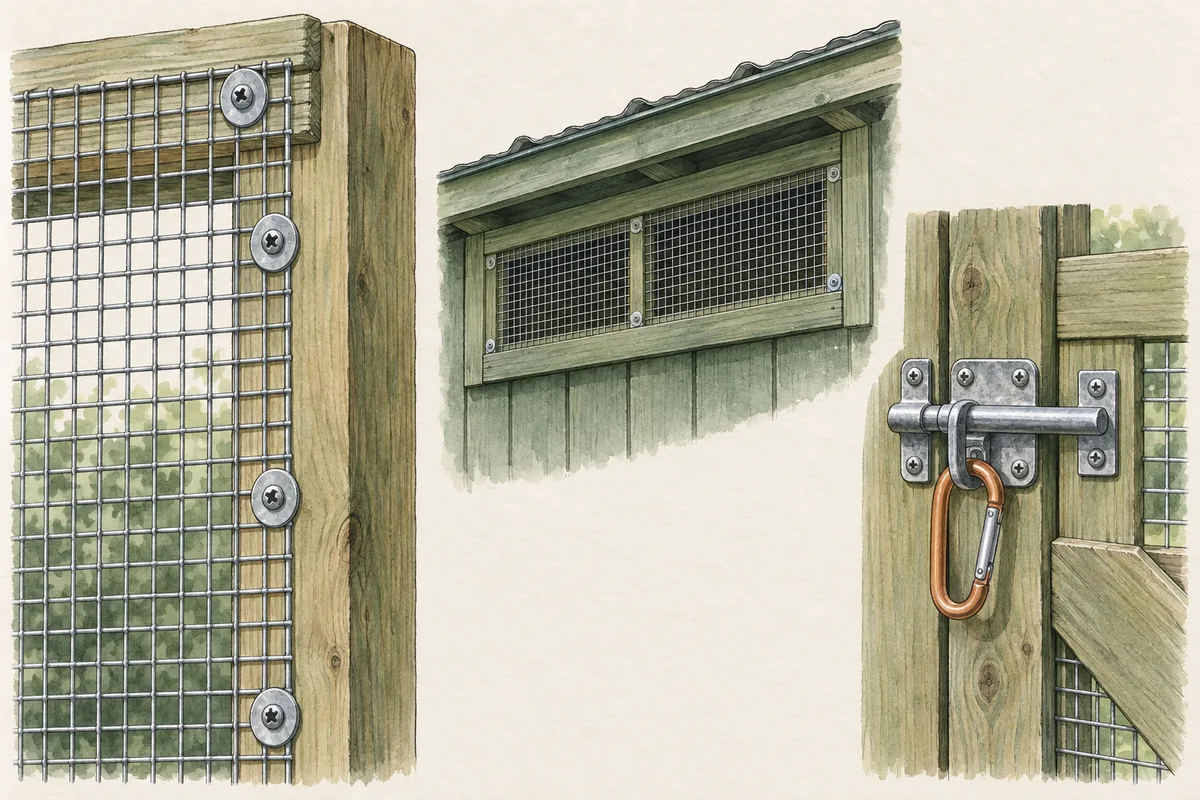
Fasten the mesh to the wooden structure rather than holding it with only a few light staples. Screws with washers or strong fasteners distributed around the frame resist repeated pulling more effectively.
3. Stop animals from digging under the run
A shallow depression beside the fence can become an entrance after several nights. Depending on your soil and local predators, bury part of the mesh or install a firmly attached horizontal wire apron extending outward from the base. The goal is to prevent a digging animal from immediately finding a free lower edge.
Check corners, thresholds and places where rain washes soil away. Walk the perimeter again after heavy rain or a thaw.
4. Secure the top of the run
A solid roof protects against birds of prey, climbing animals and bad weather. If the whole run cannot be roofed, mesh or netting designed for this use can reduce risk when it is kept tight and in good repair. Hens should also have covered places where they can quickly take shelter during the day.
5. Choose latches that require two actions
A simple hook that lifts easily may not be enough. Some animals are remarkably skilled with their paws. Add a carabiner to the latch, or choose a closure that requires two different movements. Check the hinges as well: a locked door remains vulnerable if the other side can be pushed away from the frame.
6. Cover ventilation openings without blocking airflow
Ventilation remains essential, including in winter. Do not seal every opening to secure the coop. Cover vents with welded hardware cloth firmly attached to the frame. This preserves airflow while blocking a small predator or rodent. The guide to preparing chickens and the coop for winter.
7. Remove food that attracts visitors
Pick up spilled feed and store reserves in a closed, rodent-resistant container. Keep food scraps away from the enclosure. A regular food source first attracts small animals, which may then attract larger predators.
Avoid stacking boards, tall weeds or unused objects against the coop. They hide tracks, make inspection harder and may shelter rodents.
8. Add visual shelters inside the run
Safety is not only about the fence. Shrubs set back from the enclosure, a small roof, a sturdy low table or shade panels give hens places to retreat when a raptor passes overhead. Keep these features stable and make sure they do not form a ladder against the fence. They can be combined with the simple chicken enrichment ideas.
9. Test the structure instead of only looking at it
Once a week, push the doors, pull on the mesh and check fasteners by hand. Look for tracks, displaced feathers, small holes and marks near the latches. A camera can help identify a nighttime visitor, but it does not replace repairing a visible weakness.
Read the clues without jumping to conclusions
A hole at the base of the fence suggests a digging animal. A disturbed upper section may point to a climber. Paw marks around the latch show that the closure needs reinforcement. However, clues often overlap. One feather or one footprint is not enough to identify a predator with certainty.
Look at the whole pattern: the size of the opening, the height of the marks, the time of activity and any disturbed food. This helps you choose an appropriate repair without placing unnecessary traps or hazardous products near your hens, pets or local wildlife.
Restore a predator proof chicken coop after an attempted entry
If you find a breach, first move the hens into a closed, quiet area. Count them, examine them without chasing them and check for bleeding, limping or difficult breathing. A wound hidden beneath the feathers may still require prompt veterinary advice.
Repair the entry point before the next night. A temporary panel secured with screws is safer than an object simply leaned against the gap. Inspect the complete perimeter afterward because the first opening you notice may not be the only one.
After a scare, the hens may be more nervous. Keep water, feed and familiar timing as consistent as possible. If you must separate an injured hen and later return her to the group, the principles in introducing new chickens gradually can also help reduce tension.
A short routine for a quieter night
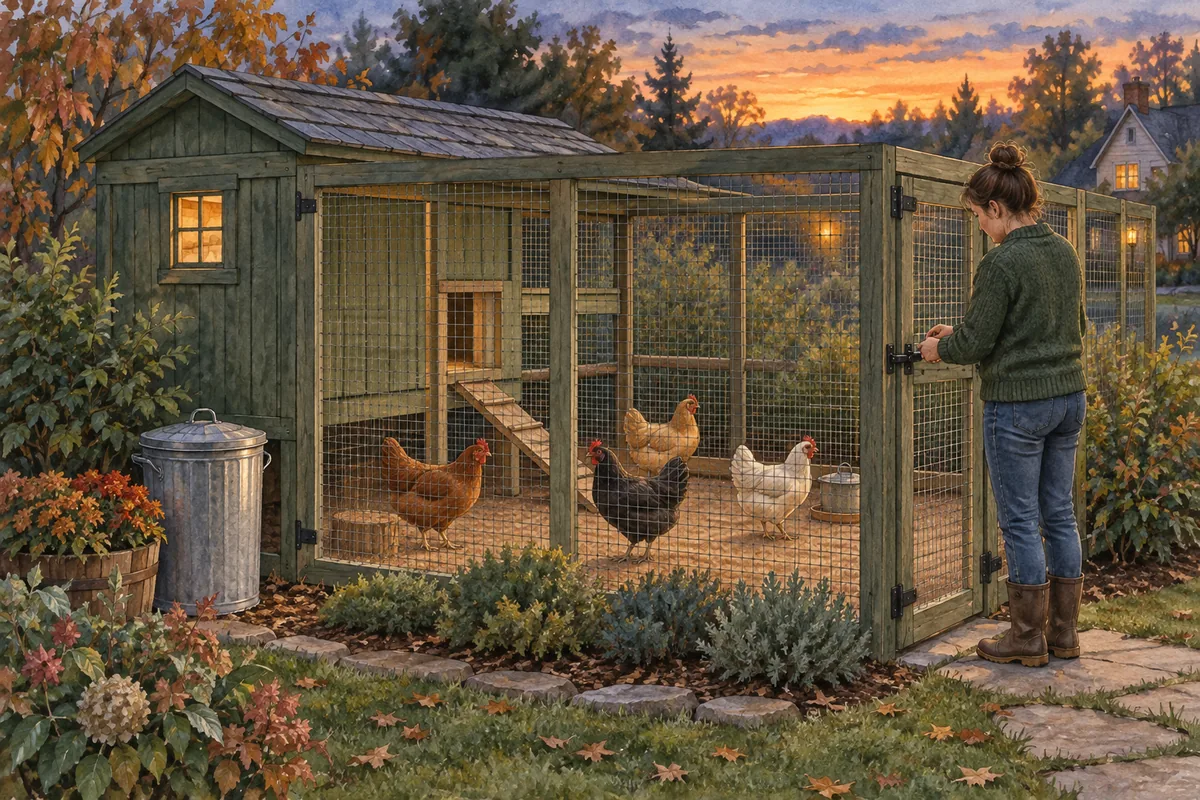
A predator proof chicken coop is easier to maintain when the check becomes part of every evening: count the hens, close the shelter, test the latch, inspect the lower mesh and store the feed. It only takes a few minutes and helps you notice a weakness before it becomes an entrance.
Which part of your coop deserves your first check tonight: the ground, the roof, the mesh or the latches?
Keep exploring this world
Why Are My Chickens Pecking Each Other? 8 Causes and an Action Plan to Protect the Victim
Is one hen being chased or losing feathers? Separate normal pecking-order behaviour from harmful pecking and follow a practical plan to protect her.
Read the article
Chicken Water in Winter: How to Keep the Waterer from Freezing
Does your chicken waterer freeze every morning? Compare options with and without electricity, plan water changes and prepare a backup for cold spells.
Read the article
Chicken Mites: 7 Warning Signs and a Practical Home Treatment Plan
Seven warning signs of chicken mites and a practical do-it-yourself plan to clean, treat and monitor the coop.
Read the article