Chicken enrichment ideas do not need to be complicated or expensive. A few well-chosen features can turn an empty run into a place where hens scratch, forage, explore, dust-bathe and rest above the ground. The goal is not to entertain them like people, but to give them more opportunities to express their natural behaviours.
Good enrichment stays simple, stable and easy to clean. It complements a secure coop, clean water and a complete feed; it does not replace any of these essential needs. Here are seven practical ideas you can adapt to the size of your run, the season and the habits of your flock.
Why offer enrichment to your hens?
Hens naturally spend a great deal of time scratching the ground, pecking, moving between open areas and sheltered spots, perching and bathing in dry material. Codes of practice for laying-hen welfare recommend furnishings that support foraging, perching, nesting and dust bathing.
In a small backyard flock, these principles can be met with very ordinary items. Before adding anything, look carefully at the available space. Hens need to move without being trapped in a dead end, reach the feeder and drinker easily, and get away from another hen when tension arises.
7 easy chicken enrichment ideas
1. A scratching area with dry materials
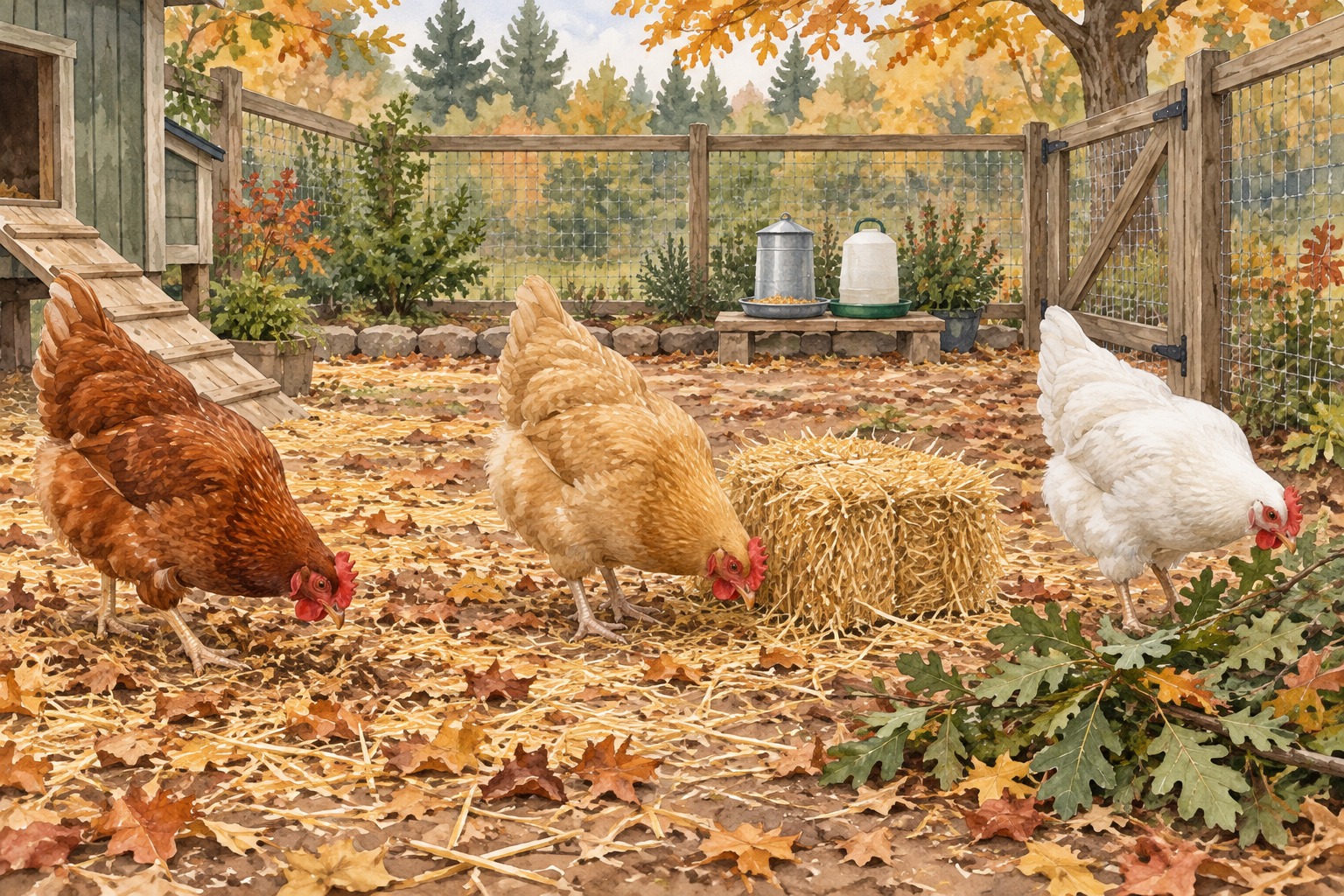
Place a small amount of dry leaves, clean straw or untreated shavings in a well-drained part of the run. The hens can turn the material over, search for small particles and spread it with their feet. A light layer is enough: a deep, damp accumulation becomes difficult to maintain.
Remove mouldy, dirty or waterlogged material immediately. If you use straw, make sure it contains no twine or wrapping net. To keep the floor healthier, see our guide to chicken coop bedding.
2. A dry, sheltered dust bath
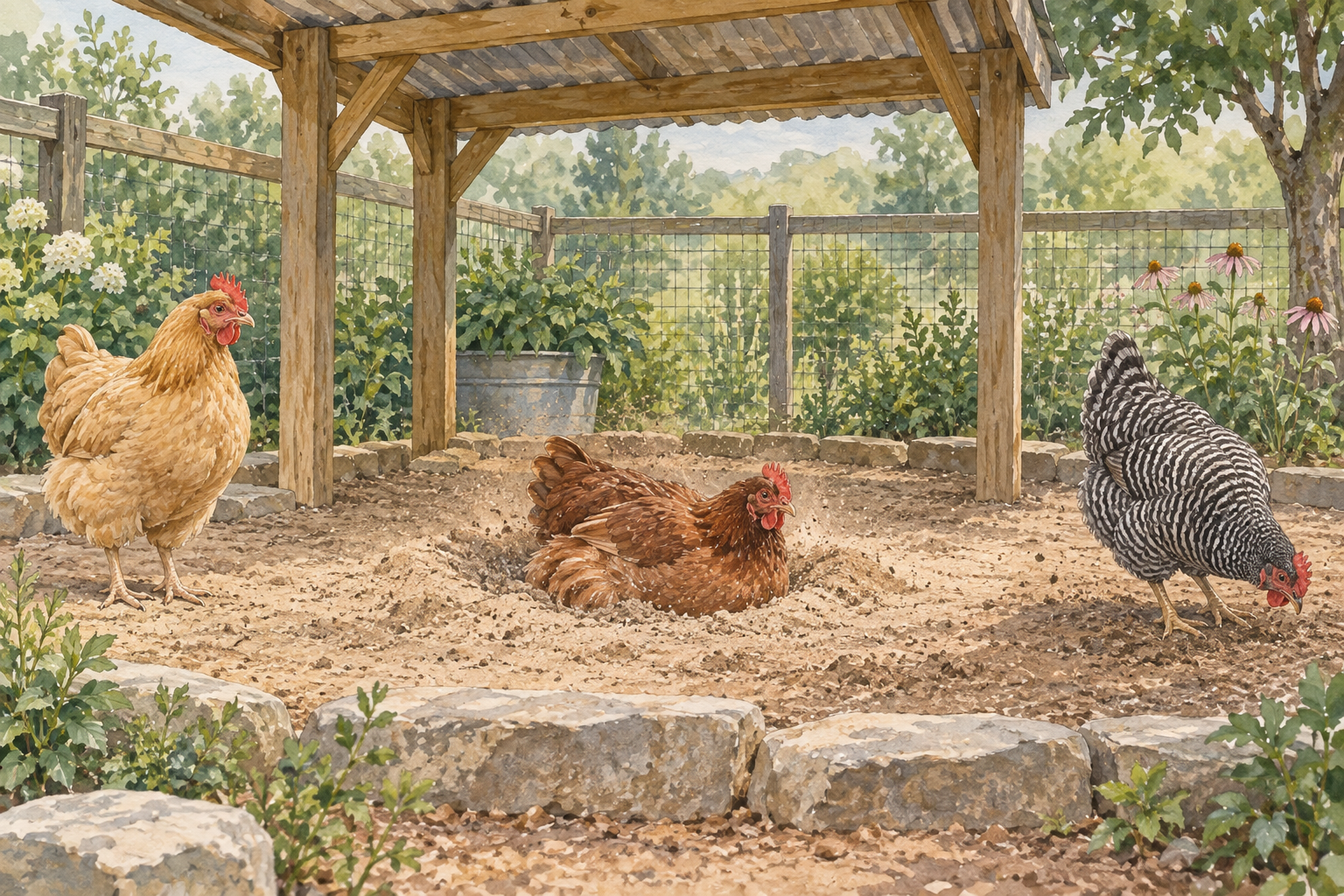
A dust bath is more than a game: it supports an essential behaviour. Choose a wide, shallow container or a defined ground area where several hens can enter without crowding. Place it beneath a roof or small shelter, away from runoff. Fine, clean, thoroughly dry soil works well; avoid scented products, irritating powders and caustic ash.
3. A small straw bale with no twine
A small bale of clean straw provides both a surface to explore and a little height. Lay it flat so it stays stable, remove every piece of twine and leave enough room around it. The hens can climb on it, scratch at loose stems and forage around the base.
Inspect it often. Replace it as soon as it absorbs moisture, smells mouldy or falls apart into a pile that is hard to clean. In a run exposed to rain, keep this feature beneath a covered section.
4. Low logs and stumps
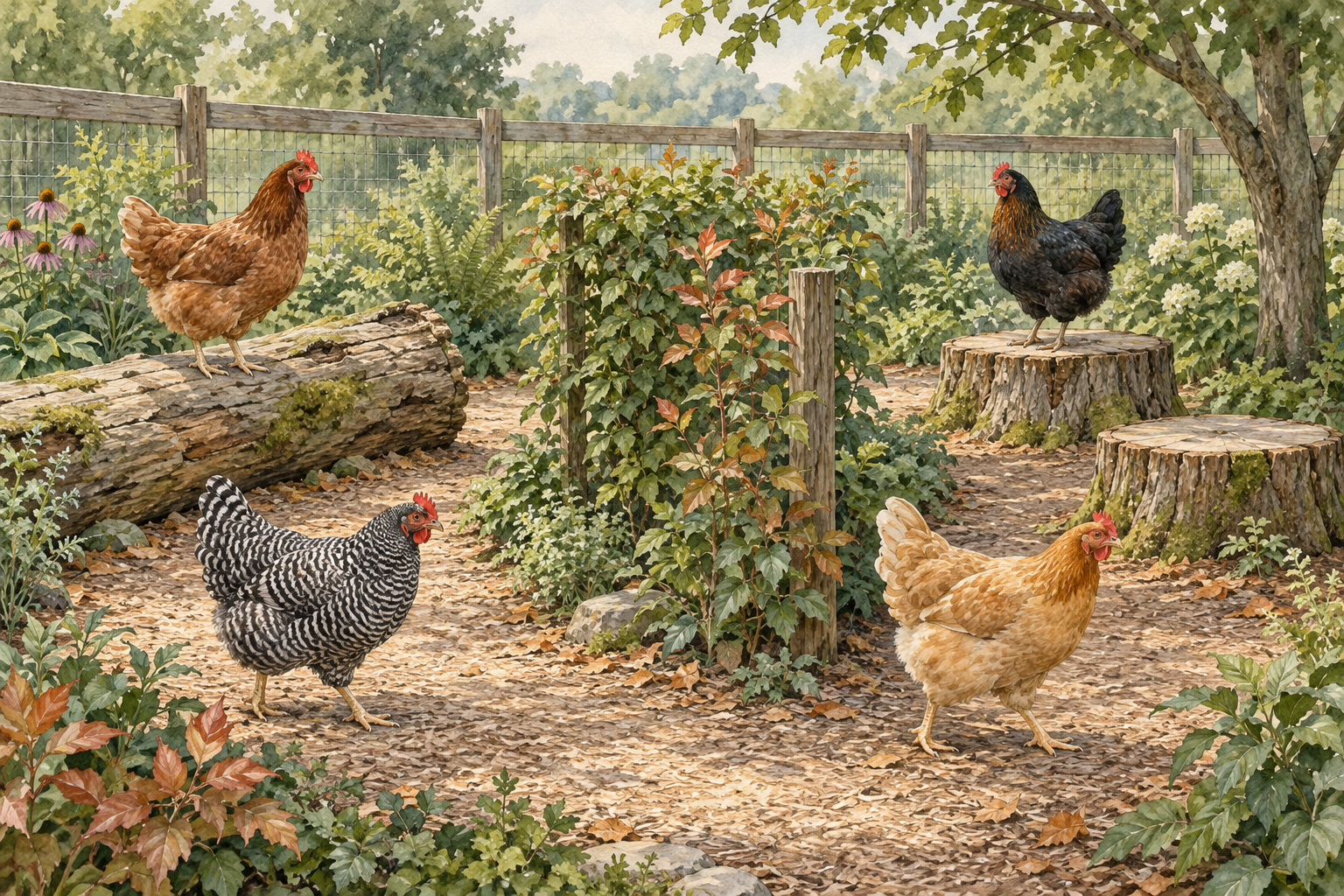
A log laid on the ground, a broad stump or a low platform can add several levels without a complicated installation. Choose untreated wood with no nails or protruding splinters, and make sure it is heavy enough not to roll. A hen should be able to step up and down easily without falling onto the feeder or blocking a path.
Spread the features out instead of stacking them. Two or three low points let hens watch one another, move around each other and choose a spot. Clean the surfaces where they like to rest.
5. Leafy branches to investigate
Fresh branches from a safe plant can provide leaves to inspect and a little shade. Secure them firmly in a holder or lay them on the ground, with no long cord or fastening that could catch a foot. Never offer a plant unless you have identified it with certainty.
You can also hang a leafy vegetable occasionally at a low height, using a short, secure fastening. This should remain a small activity rather than a main meal. Complete feed must stay at the centre of the diet; too many treats dilute its nutritional balance.
6. Visual screens and multiple routes
A firmly fixed low board, an open panel or a few protected plants can divide a large open area. These screens let a hen move behind an obstacle and out of sight of a more persistent flock mate. They can also make the run more interesting to explore.
Always leave at least two routes around a screen. Avoid narrow corners where a lower-ranking hen could be trapped. Edges should be smooth, the structure stable and visibility good enough for you to monitor the flock.
7. A simple enrichment rotation
Instead of filling the run with new items, change one feature at a time. Move a log, replace the dry leaves or introduce a different branch. A light rotation keeps the area interesting and lets you see what the hens actually use.
Watch the flock during the first few hours. Some hens approach quickly; others need time. If an object causes lasting panic, blocks movement or creates too much competition, remove it and try something simpler.
How to choose the right enrichment for your hens
Start with the behaviour you want to support. If the ground is bare and compacted, create a scratching area. If the hens dig beneath the shelter whenever it is dry, improve their dust bath. If the run is completely flat, add one or two low supports. In a flock with frequent chasing, visual screens and several routes are often more useful than a pecking object.
Consider the season as well. In autumn and winter, favour dry materials under cover and quickly remove anything that holds water. In summer, shade, leafy branches and access to a dry dust bath become especially valuable. A morning and evening chicken coop routine helps you spot a displaced, dirty or unstable item quickly.
Mistakes to avoid
- Leaving twine, netting, staples or nails within reach.
- Installing an object that rolls, tips or has sharp edges.
- Overfilling the run until movement is restricted.
- Placing an obstacle in front of the feeder, drinker, door or ramp.
- Leaving wet food to decay on the ground.
- Adding several new features at once without watching the flock.
- Using chicken enrichment as a substitute for space, security, clean water or a complete feed.
If you have just added new hens, wait until the essential areas and escape routes are well organized before adding objects. Our guide on how tointroducing new chickens gradually will help you prepare this stage without rushing.
A quick weekly check
Once a week, take a few minutes to touch each structure, test its stability and look underneath. Remove damp material, leftover food and pieces that could catch a foot. Clean resting surfaces and make sure the flock still has several open routes.
The best chicken enrichment ideas are often the easiest to maintain. A dry dust bath, a few materials to scratch through and two stable supports can be more useful than a complicated installation. Watch your hens: the way they scratch, move and rest will show you which feature is worth keeping.
What small change would make your run more interesting and easier to use this week?
Useful sources
- National Farm Animal Care Council — Code of Practice for Pullets and Laying Hens
- United Kingdom government — poultry welfare recommendations
- RSPCA — natural behaviours of laying hens
Keep exploring this world
Why Are My Chickens Pecking Each Other? 8 Causes and an Action Plan to Protect the Victim
Is one hen being chased or losing feathers? Separate normal pecking-order behaviour from harmful pecking and follow a practical plan to protect her.
Read the article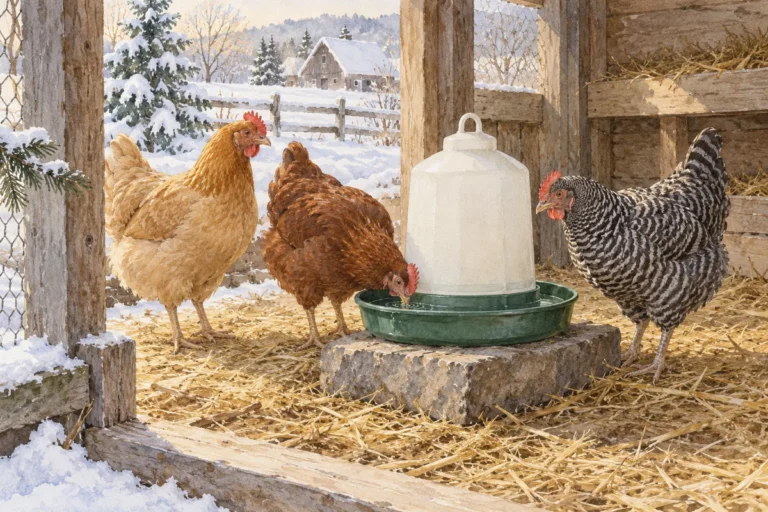
Chicken Water in Winter: How to Keep the Waterer from Freezing
Does your chicken waterer freeze every morning? Compare options with and without electricity, plan water changes and prepare a backup for cold spells.
Read the article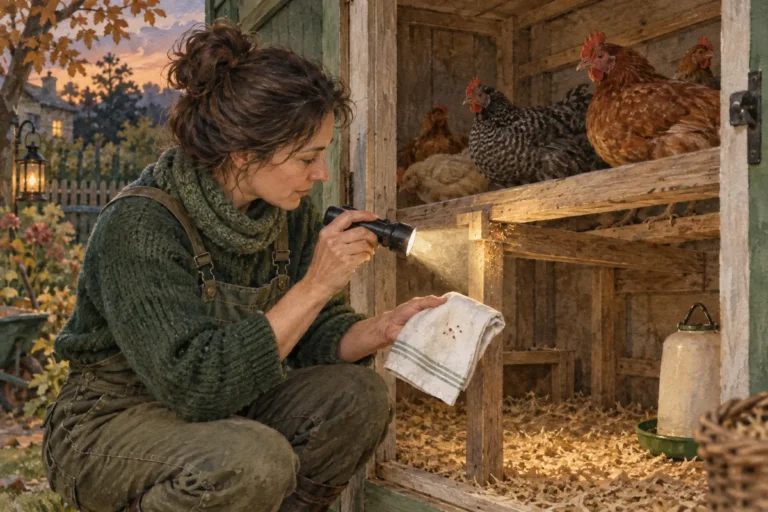
Chicken Mites: 7 Warning Signs and a Practical Home Treatment Plan
Seven warning signs of chicken mites and a practical do-it-yourself plan to clean, treat and monitor the coop.
Read the article